
Early Orthodontic Treatment in Dubai: Signs Your Child May Need Braces
A healthy, confident smile begins early. Many parents assume orthodontic treatment only starts in the teenage years, but in reality, some children benefit from orthodontic evaluation and treatment much sooner. Early orthodontic treatment, sometimes called interceptive orthodontics, can help identify developing problems before they become more serious and more difficult to correct later.
For families in Dubai, where parents are increasingly focused on both oral health and long-term facial development, early orthodontic care can play an important role in a child’s overall wellbeing. It is not always about putting braces on very young children. In many cases, it is about monitoring growth, guiding jaw development, creating room for incoming teeth, and reducing the risk of more complex treatment in the future.
This guide explains what early orthodontic treatment means, why it matters, and the key signs that may suggest your child needs braces or an orthodontic assessment.
What Is Early Orthodontic Treatment?
Early orthodontic treatment refers to orthodontic care provided while a child is still growing, often before all permanent teeth have erupted. The goal is to identify and manage problems with tooth alignment, jaw growth, bite development, and oral habits at a stage when the bones and teeth are still easier to guide.
This does not mean every child needs braces at a young age. Many children only need monitoring until the right time for treatment. However, for some children, early intervention can make a meaningful difference.
Early treatment may include:
- space maintainers
- limited braces
- palatal expanders
- habit-breaking appliances
- guidance of erupting teeth
- monitoring jaw growth and bite changes
The purpose is to support proper development, not simply to improve appearance. While aesthetics are often part of the outcome, the real value of early orthodontics lies in protecting function, health, and long-term stability.
Why Early Orthodontic Evaluation Matters
Children’s mouths and jaws change rapidly as they grow. If a problem is detected early, an orthodontist may be able to guide development in a way that prevents more severe issues later on.
Some problems become more noticeable over time if they are left untreated. Crowding may worsen, bite problems may become more established, and jaw discrepancies may be harder to manage once growth slows down.
Early orthodontic care can help:
- guide jaw growth into a healthier position
- improve the way upper and lower teeth meet
- create room for crowded erupting teeth
- reduce the risk of trauma to protruding front teeth
- address harmful oral habits
- improve speech or chewing in some cases
- make future treatment simpler and more efficient
For parents, one of the biggest benefits is clarity. An early assessment helps you understand whether your child needs treatment now, later, or simply routine observation.
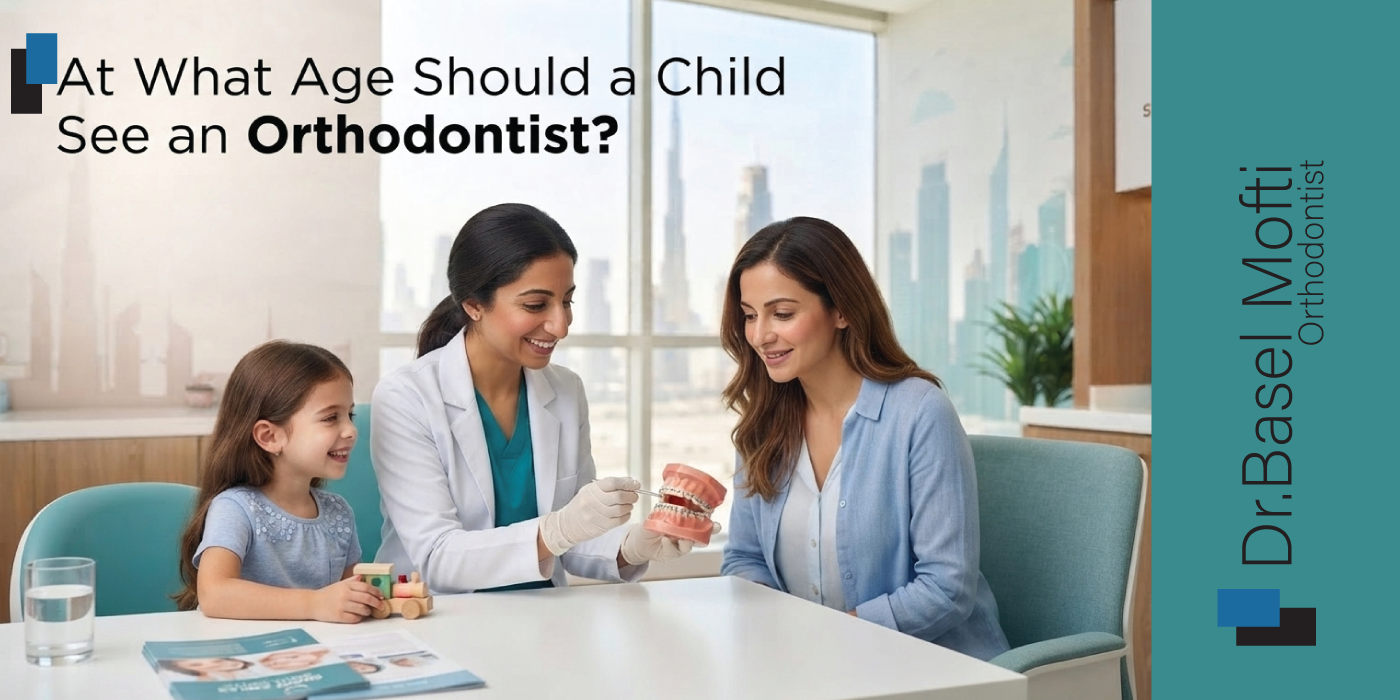
At What Age Should a Child See an Orthodontist?
A child’s first orthodontic evaluation is commonly recommended around the age of 7. At this stage, the child usually has a mix of baby teeth and permanent teeth, which allows developing problems to be identified more clearly.
By age 7, an orthodontist can often assess:
- how the jaws are growing
- whether the bite is developing normally
- whether there is crowding or lack of space
- whether teeth are erupting in the right direction
- whether oral habits are affecting development
This does not mean treatment must begin at age 7. It simply means it is a good age to detect concerns early.
Some children may need an assessment even earlier if parents notice obvious bite problems, difficulty chewing, speech issues, or prolonged thumb sucking.
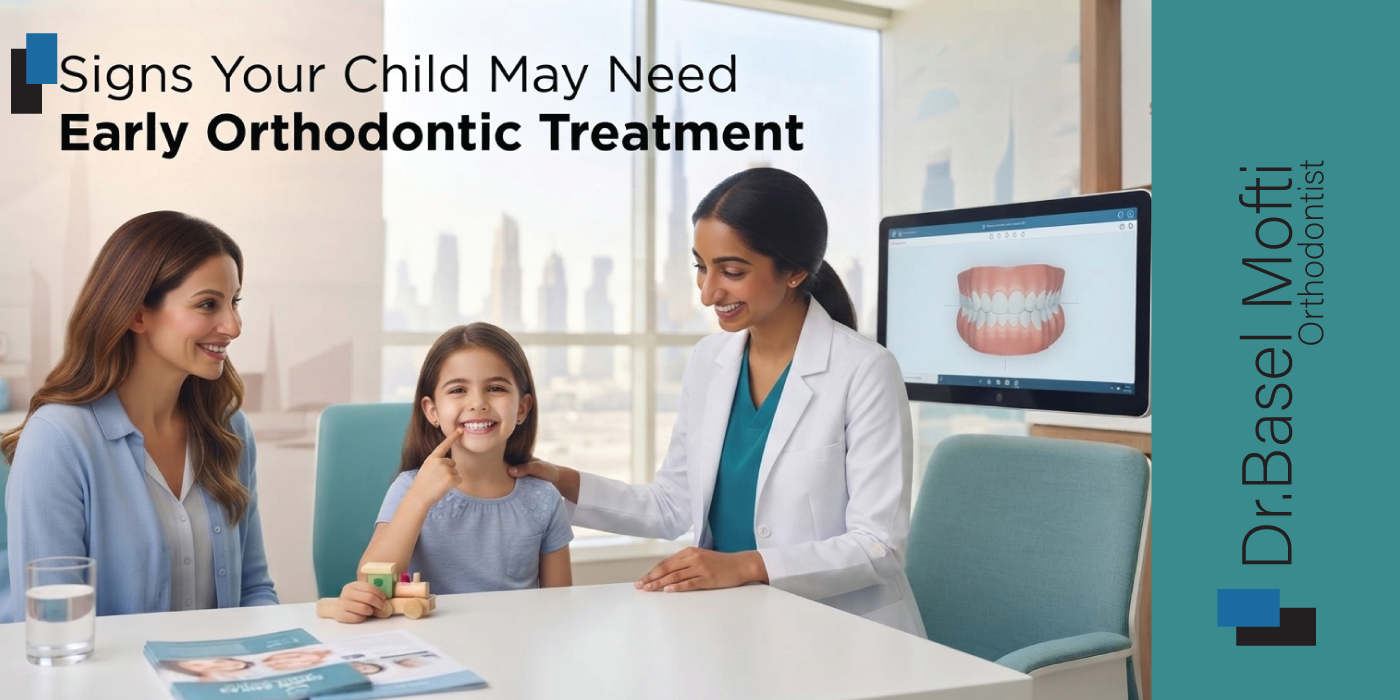
Signs Your Child May Need Early Orthodontic Treatment
Not every orthodontic issue is easy to spot, but there are several signs parents can watch for. If one or more of these are present, an orthodontic consultation is a sensible next step.
- Crowded or Crooked Teeth
One of the most obvious signs is crowding. If your child’s teeth appear overlapping, twisted, or erupting in the wrong position, this may indicate that there is not enough room in the jaw.
Crowding can affect both baby teeth and permanent teeth. Sometimes parents notice adult teeth coming in behind baby teeth or erupting far outside the expected arch. While mild irregularity may not always require early treatment, significant crowding may benefit from intervention to create or preserve space.
Untreated crowding can make brushing more difficult, increase plaque retention, and affect the way teeth erupt in the future.
- Early or Late Loss of Baby Teeth
Baby teeth act as natural guides for permanent teeth. If they fall out too early or remain in place for too long, the developing bite can be affected.
Early loss of baby teeth may allow neighboring teeth to drift into the empty space, reducing room for the adult teeth that need to erupt later. Delayed loss can also interfere with the proper eruption path of permanent teeth.
If your child loses baby teeth much earlier than expected, or if permanent teeth seem delayed or blocked, it is worth having this checked.
- Difficulty Biting or Chewing
Children should be able to bite and chew comfortably. If your child struggles to bite into food, chews only on one side, avoids certain textures, or complains of discomfort while eating, the bite may not be functioning properly.
A poor bite can affect everyday comfort and may also influence jaw development over time. In some cases, children adapt without realizing there is a problem, so parents may only notice subtle eating habits or complaints.
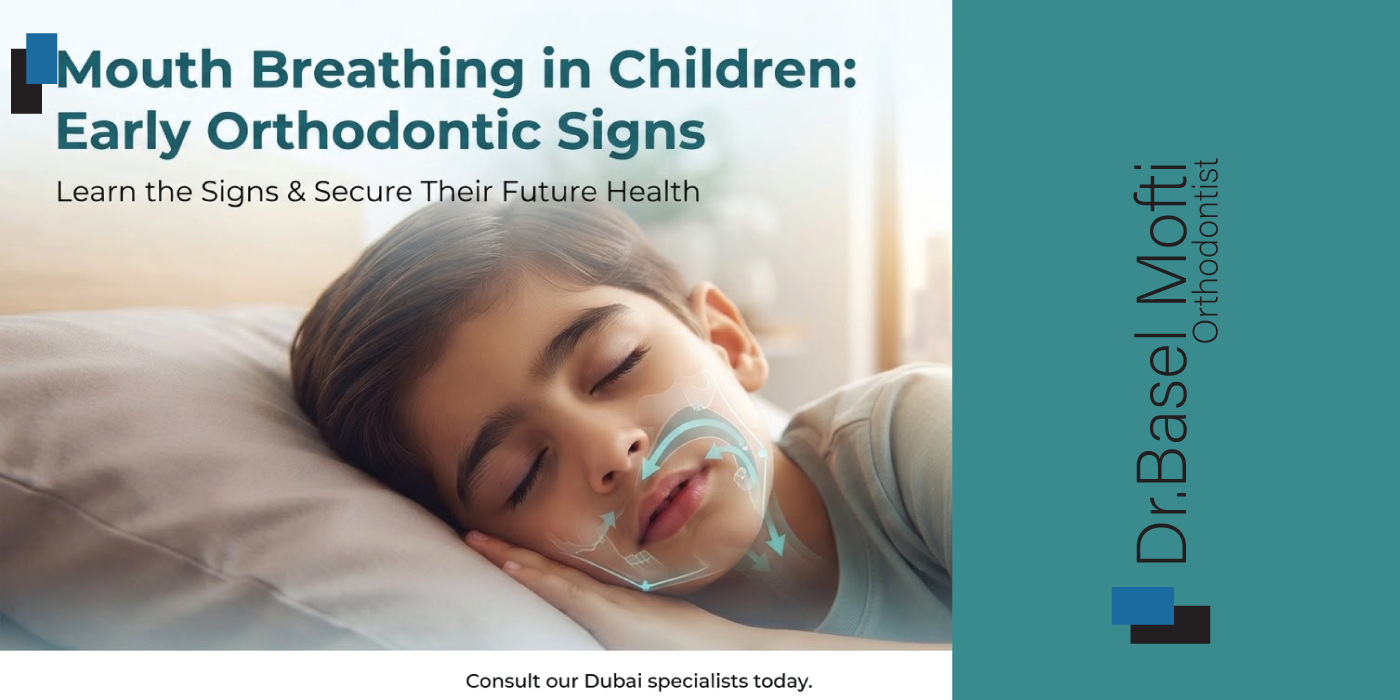
- Mouth Breathing
Persistent mouth breathing can be associated with changes in facial growth, dental arch development, and oral posture. While mouth breathing may have causes beyond orthodontics, such as enlarged adenoids or nasal blockage, it is still an important sign to take seriously.
Children who breathe mostly through the mouth may also show:
- dry lips
- open-mouth posture at rest
- snoring
- restless sleep
- narrow upper arches
- long or tired facial appearance
When mouth breathing is combined with bite or alignment concerns, early orthodontic assessment can be especially useful.
- Thumb Sucking or Prolonged Pacifier Use
Thumb sucking and pacifier habits are common in early childhood, but if they continue for too long, they can influence the position of the teeth and the development of the jaws.
Prolonged sucking habits may contribute to:
- protruding upper front teeth
- open bite
- narrow upper jaw
- altered tongue posture
Some children stop these habits naturally. Others need help breaking the pattern before the habit causes more lasting orthodontic effects.
- Teeth That Do Not Meet Properly
When the upper and lower teeth do not fit together correctly, this may point to an underlying bite issue.
Common bite problems include:
- overbite – upper front teeth overlap the lower teeth too much
- underbite – lower teeth sit in front of upper teeth
- crossbite – some upper teeth bite inside lower teeth
- open bite – front teeth do not touch when the mouth is closed
These problems are more than cosmetic. They can affect chewing, speaking, tooth wear, and jaw function. Some bite issues are easier to correct while the child is still growing.
- Jaws That Shift, Click, or Look Uneven
If the jaw shifts to one side when your child closes the mouth, or if the face appears asymmetrical, this may suggest that the bite is guiding the jaw into an unhealthy position.
Parents may also notice:
- the chin moving to one side
- the upper and lower dental midlines not matching
- one side biting differently from the other
- jaw noises during movement
These issues should not be ignored, especially during growth years.
- Protruding Front Teeth
Upper front teeth that stick out significantly are sometimes more vulnerable to accidental trauma, especially in active children. A child who plays sports, runs frequently, or has falls can be at greater risk of chipping or injuring prominent front teeth.
Early orthodontic treatment may sometimes help reposition or protect these teeth, depending on the age of the child and the nature of the problem.
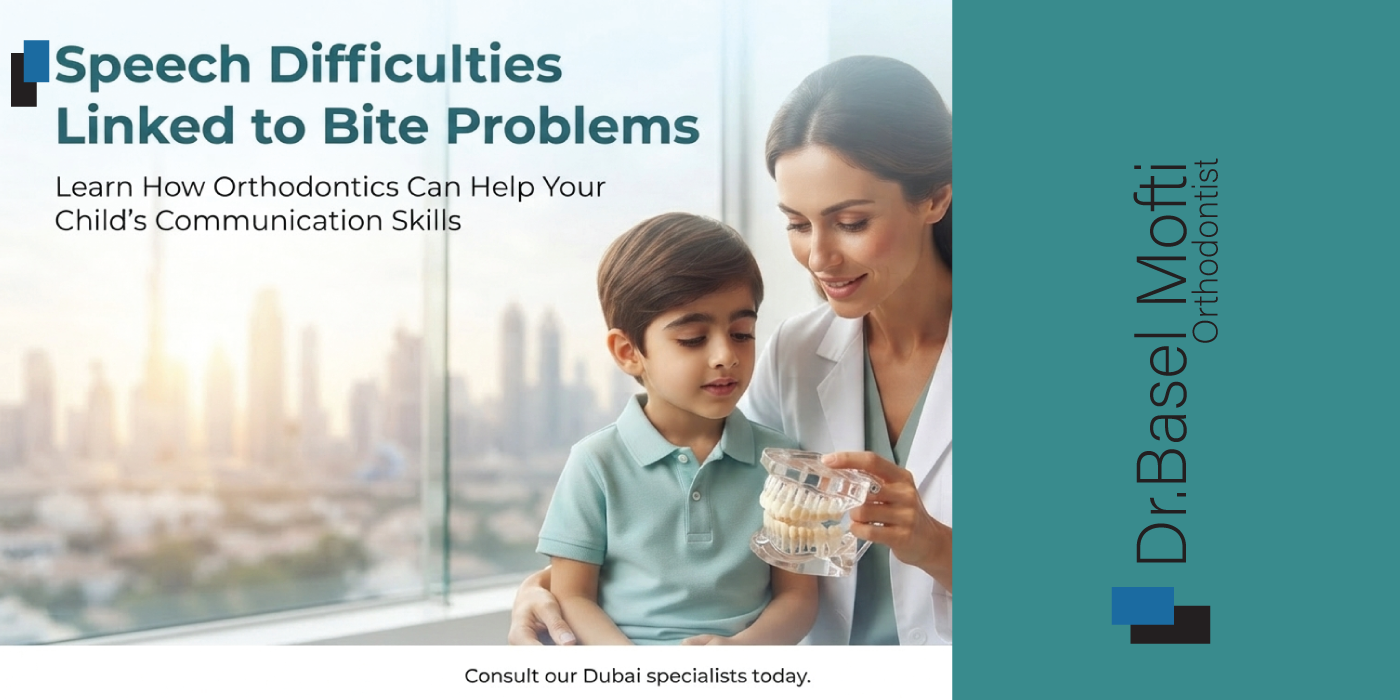
- Speech Difficulties Linked to Bite Problems
Not every speech concern is caused by orthodontic issues, but the position of the teeth and jaws can influence how some sounds are produced. If a child has trouble with certain sounds and also shows visible bite irregularities, orthodontic assessment may be helpful as part of a broader evaluation.
Orthodontic treatment is not a substitute for speech therapy when that is needed, but in some cases, improving oral structure supports clearer function.
- Frequent Biting of the Cheeks or Palate
If your child often bites the inside of the cheeks or the roof of the mouth, it may be a sign that the bite is not fitting together in a balanced way. This can happen with crossbites, deep bites, or certain jaw discrepancies.
Repeated soft tissue trauma is not normal and deserves attention.
- Teeth Grinding or Jaw Strain
Some children grind their teeth, especially during sleep. While grinding alone does not always mean braces are needed, it can sometimes occur alongside bite imbalances or jaw tension.
If grinding is accompanied by tooth wear, jaw discomfort, headaches, or other visible orthodontic concerns, a professional assessment is a good idea.
- Family History of Orthodontic Problems
Genetics plays a major role in dental and jaw development. If parents had severe crowding, impacted teeth, jaw discrepancies, or required braces or jaw-related treatment, the child may also be more likely to develop similar problems.
A family history does not guarantee the same outcome, but it does justify earlier attention and careful monitoring.
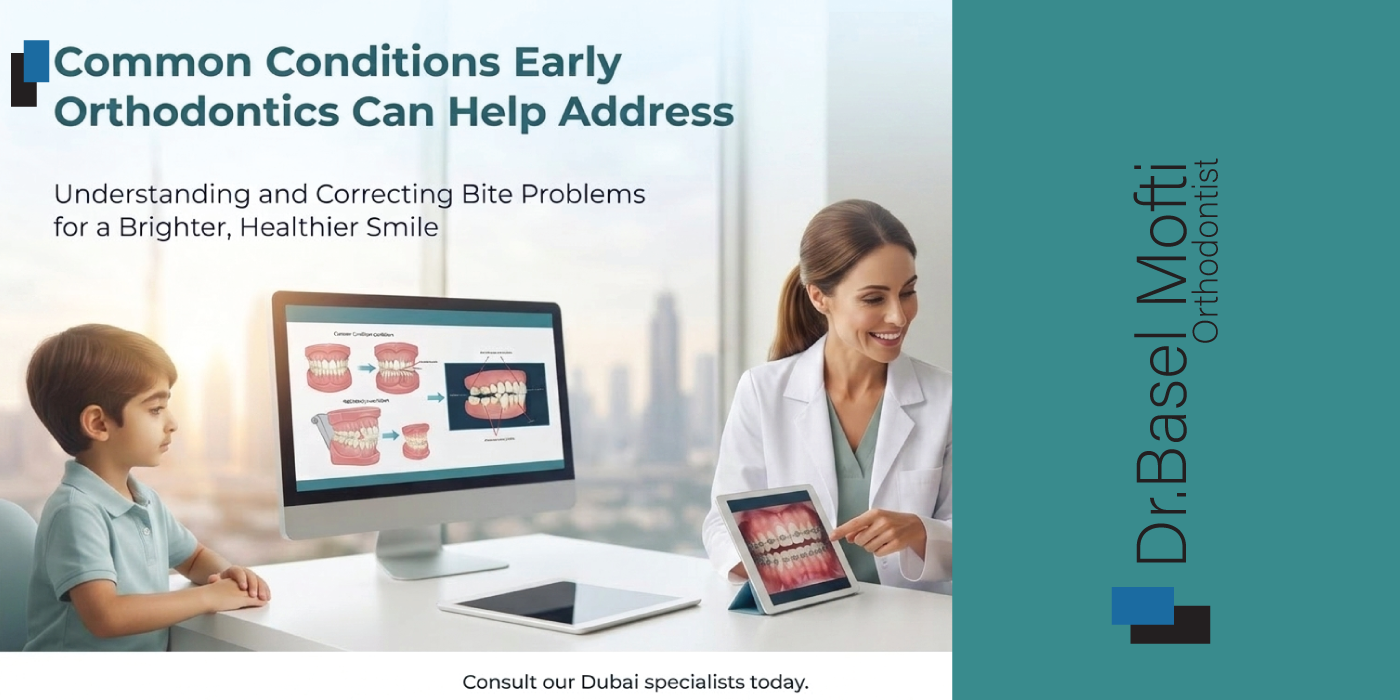
Common Conditions Early Orthodontics Can Help Address
Early orthodontic treatment can be useful in selected cases involving:
- narrow upper jaw
- crossbite
- severe crowding
- protruding front teeth
- jaw growth imbalance
- spacing problems caused by premature tooth loss
- harmful sucking habits
- eruption guidance issues
The exact treatment depends on the child’s age, growth pattern, oral habits, and the severity of the issue.

What Early Treatment May Involve
Parents are often surprised to learn that early orthodontic treatment does not always mean full braces on every tooth. Depending on the problem, treatment can be quite focused.
Possible approaches include:
Palatal expansion
If the upper jaw is too narrow, an orthodontist may use an expander to widen it gradually. This can help improve crossbite, create space, and support a healthier bite relationship.
Limited braces
In some cases, only certain teeth need to be guided into better position early on. This may be done with partial braces rather than comprehensive full-mouth treatment.
Space maintenance
If a baby tooth is lost too soon, a space maintainer can help preserve the room needed for the permanent tooth.
Habit correction appliances
These can help discourage thumb sucking or similar habits when they are affecting the bite.
Growth monitoring
Sometimes the best early treatment is careful observation over time. Regular reviews allow the orthodontist to step in at the right moment if needed.
Does Early Treatment Prevent Braces Later?
This is one of the most common questions parents ask. The answer is not always, but early treatment can still be very beneficial.
Some children who receive early orthodontic care will still need braces as teenagers. However, early intervention may:
- reduce the severity of the future problem
- shorten later treatment time
- lower the chance of tooth extractions
- improve jaw balance
- make comprehensive treatment more straightforward
Think of early treatment as guiding development rather than promising to eliminate all future orthodontic needs.
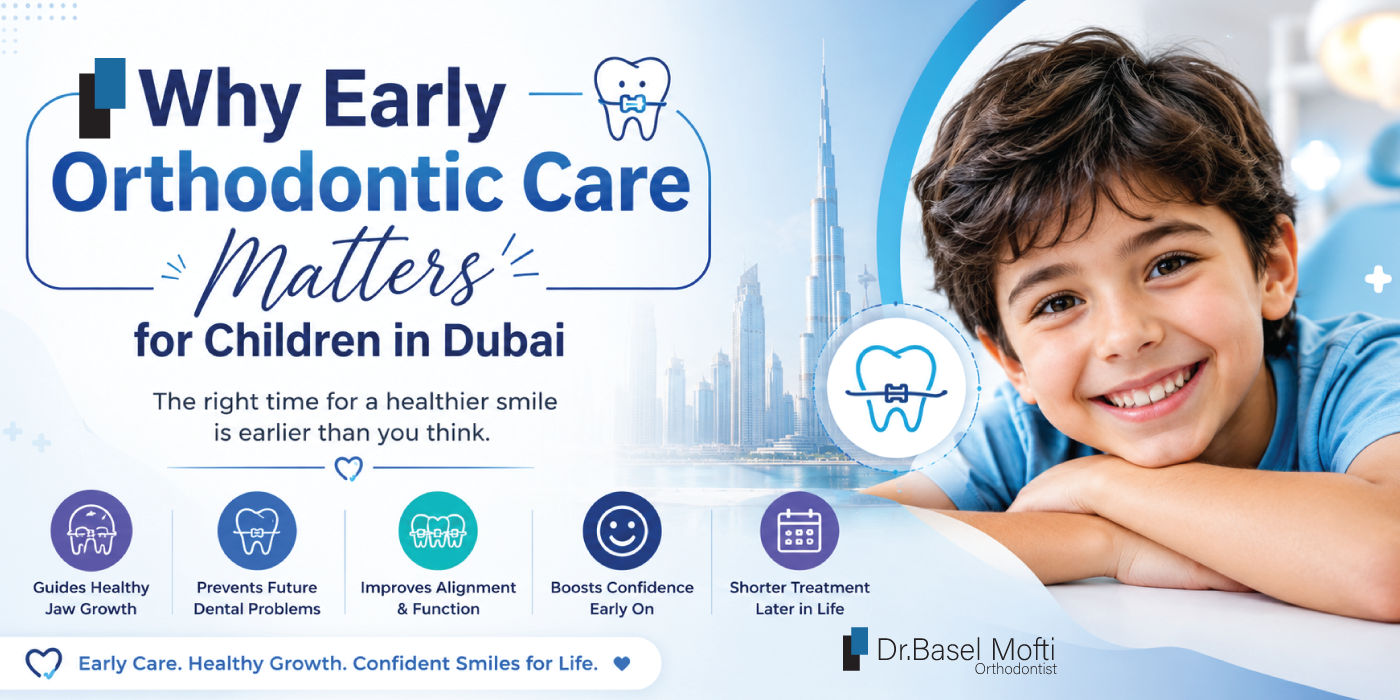
Why Early Orthodontic Care Matters for Children in Dubai
Dubai families often value preventive care, modern treatment options, and long-term health planning. Early orthodontic evaluation fits naturally into that approach. It allows parents to detect problems before they progress and gives children the chance to develop a healthier bite during key years of growth.
Lifestyle also matters. Children today often have busy schedules filled with school, sports, social activities, and screen time. If bite or jaw issues are already affecting sleep, breathing, speech, or confidence, early support can make a real difference in day-to-day life.
The goal is not to over-treat children. It is to identify which children genuinely benefit from guidance at the right stage.
How Parents Can Support Healthy Dental Development
There are several simple steps parents can take to support good orthodontic development from an early age:
- schedule regular dental check-ups
- watch for prolonged thumb sucking or pacifier habits
- encourage nasal breathing when possible
- monitor how teeth erupt and how the bite looks
- seek advice if chewing, speech, or jaw movement seems unusual
- arrange an orthodontic assessment around age 7
Early awareness often leads to simpler decisions and better outcomes.
When to Book an Orthodontic Consultation
You should consider an orthodontic consultation if your child:
- is around age 7 and has never had an orthodontic assessment
- has visibly crowded, protruding, or misaligned teeth
- has a crossbite, underbite, open bite, or deep bite
- lost baby teeth too early or too late
- breathes through the mouth most of the time
- still sucks a thumb or finger
- struggles with chewing or biting
- has jaw shifting, asymmetry, or facial imbalance
- has a family history of significant orthodontic problems
A consultation does not automatically lead to treatment. Often, it provides reassurance, a timeline, and a clear plan for monitoring growth.
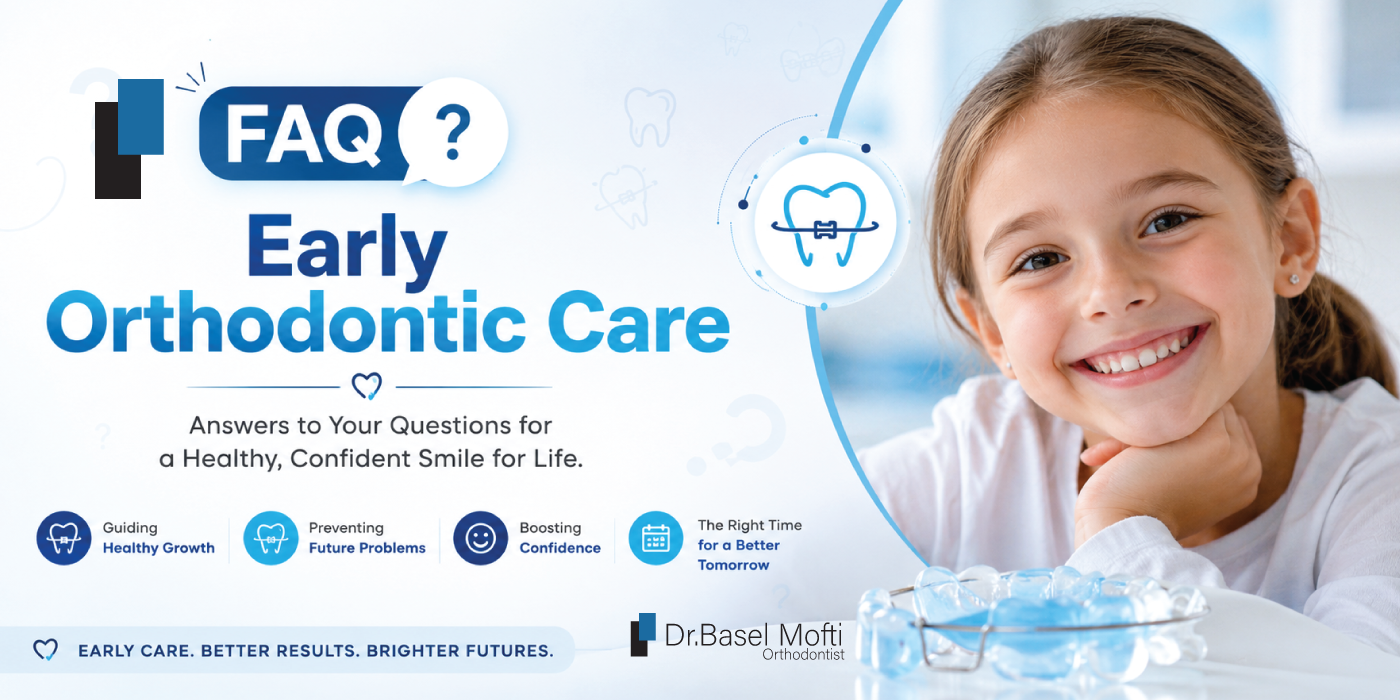
FAQ- Early Orthodontic Care
A first orthodontic assessment is often recommended around age 7. This is a useful stage because the child usually has a mix of baby teeth and permanent teeth, allowing developing bite and growth issues to be identified early.
No. Many children do not need treatment at a young age. Some only need monitoring, while others benefit from early intervention because of bite issues, crowding, jaw problems, or oral habits.
Common signs include crowded teeth, protruding front teeth, difficulty chewing, mouth breathing, thumb sucking, early loss of baby teeth, or teeth that do not meet properly when biting.
No. Early treatment may involve expanders, limited braces, space maintainers, or growth guidance. It is often more focused than full comprehensive braces.
Not always. Some children still need braces during the teenage years. However, early treatment can reduce the severity of problems and make later treatment easier.
A crossbite happens when some upper teeth bite inside the lower teeth. This may affect jaw growth and function, so it is worth assessing early, especially in a growing child.
Yes. If thumb sucking continues beyond the early years, it can contribute to open bite, protruding front teeth, and narrowing of the upper jaw.
They can be. Front teeth that stick out significantly may be more vulnerable to injury, and in some children, early treatment may help improve their position.
It can be. Mouth breathing may be associated with changes in oral posture, jaw growth, and arch development. It is worth evaluating, especially when combined with visible bite concerns.
Not every crooked tooth means treatment is needed immediately. Children's teeth change a lot during growth. An orthodontic evaluation helps determine whether the issue is normal development, something to monitor, or something that needs early care.
Most early orthodontic treatments are well tolerated. Children may feel mild pressure or temporary discomfort when appliances are adjusted, but this is usually manageable and short-lived.
It varies depending on the child and the type of issue being treated. Some early treatments last several months, while others may continue in phases with monitoring between stages.
Some orthodontic issues become more difficult to correct over time. Waiting too long can allow crowding, bite problems, or jaw discrepancies to worsen, which may lead to more complex treatment later.
In certain cases, yes. Because children are still growing, early treatment may help guide jaw development and improve the balance of the bite and facial structure.
Yes, it can still be worthwhile. General dental check-ups are important, but an orthodontist is specifically trained to assess bite development, jaw growth, and alignment concerns that may not always be obvious early on.

Why Early Orthodontic Care – By Best Orthodontist Dubai – Dr.Basel Mofti
Early orthodontic care, often referred to as interceptive orthodontics, plays a vital role in ensuring a child’s long-term oral health and facial development. The American Association of Orthodontists recommends that children have their first orthodontic evaluation around the age of seven. By this age, the first permanent molars and incisors have typically erupted, allowing an orthodontist to identify potential jaw and bite irregularities before they become severe.
Evaluating a child’s teeth and jaw growth early offers several significant advantages:
- Guiding Proper Jaw Growth: A child’s jaw is still growing and remarkably adaptable. Early intervention can gently guide jawbone growth, correcting crossbites, underbites, and narrow dental arches before the jawbone becomes fully dense.
- Creating Space for Permanent Teeth: Severe crowding occurs when there is insufficient space in the jaw for adult teeth to emerge cleanly. Interceptive appliances, such as palatal expanders, create adequate room, helping permanent teeth erupt into their natural positions.
- Simplifying Future Orthodontic Treatment: Addressing structural problems early can shorten the duration and complexity of comprehensive treatment (such as braces or clear aligners) during adolescence, often reducing the need for permanent tooth extractions or surgical jaw alignment later.
- Correcting Harmful Oral Habits: Persistent thumb sucking, tongue thrusting, and chronic mouth breathing can cause long-term skeletal misalignment. Early care helps intercept these habits before they permanently alter facial aesthetics and speech development.
- Improving Function and Health: Properly aligned teeth improve chewing efficiency and speech clarity, while making daily brushing and flossing significantly easier—protecting against early tooth decay and gum inflammation while boosting self-confidence.
An early evaluation does not always mean immediate braces; often, it allows the orthodontist to monitor development and intervene at the precise optimal moment for the healthiest, most stable outcome.
Final Thoughts
Early orthodontic treatment can play an important role in a child’s oral development, but the key is timing and proper assessment. Some children need early intervention, some need observation, and some may not need treatment until their teenage years. The value lies in knowing the difference as early as possible.
If your child shows signs such as crowding, bite problems, mouth breathing, protruding teeth, or unusual jaw development, it is wise not to wait too long before getting expert advice. Growth offers an opportunity that is not always available later in the same way.
A well-timed orthodontic evaluation can help protect your child’s smile, improve function, and create the foundation for healthier long-term development.