
Malocclusion Treatment in Dubai: Complete Guide to Correcting Bite Problems
A healthy smile is not only about straight teeth. The way your upper and lower teeth meet also plays a major role in chewing, speaking, comfort, and long-term oral health. When the teeth or jaws do not align properly, the condition is known as malocclusion. If you are searching for malocclusion treatment in Dubai, you are likely looking for a solution that improves both function and appearance.
Malocclusion is often described as a bad bite or misaligned bite. It can range from mild crowding to more complex problems involving jaw position, uneven tooth contact, overbite, underbite, crossbite, or open bite. Some cases are mainly cosmetic, while others can affect chewing efficiency, speech clarity, jaw comfort, and tooth wear.
The good news is that modern malocclusion treatment in Dubai offers many effective options for children, teenagers, and adults. Depending on the type and severity of the problem, treatment may involve braces, clear aligners, interceptive orthodontics, tooth extraction in selected cases, or jaw correction for advanced skeletal concerns.
This guide explains everything you need to know about malocclusion treatment in Dubai, including causes, types, symptoms, benefits, and treatment options, with SEO focus on the main keyword for stronger search relevance.
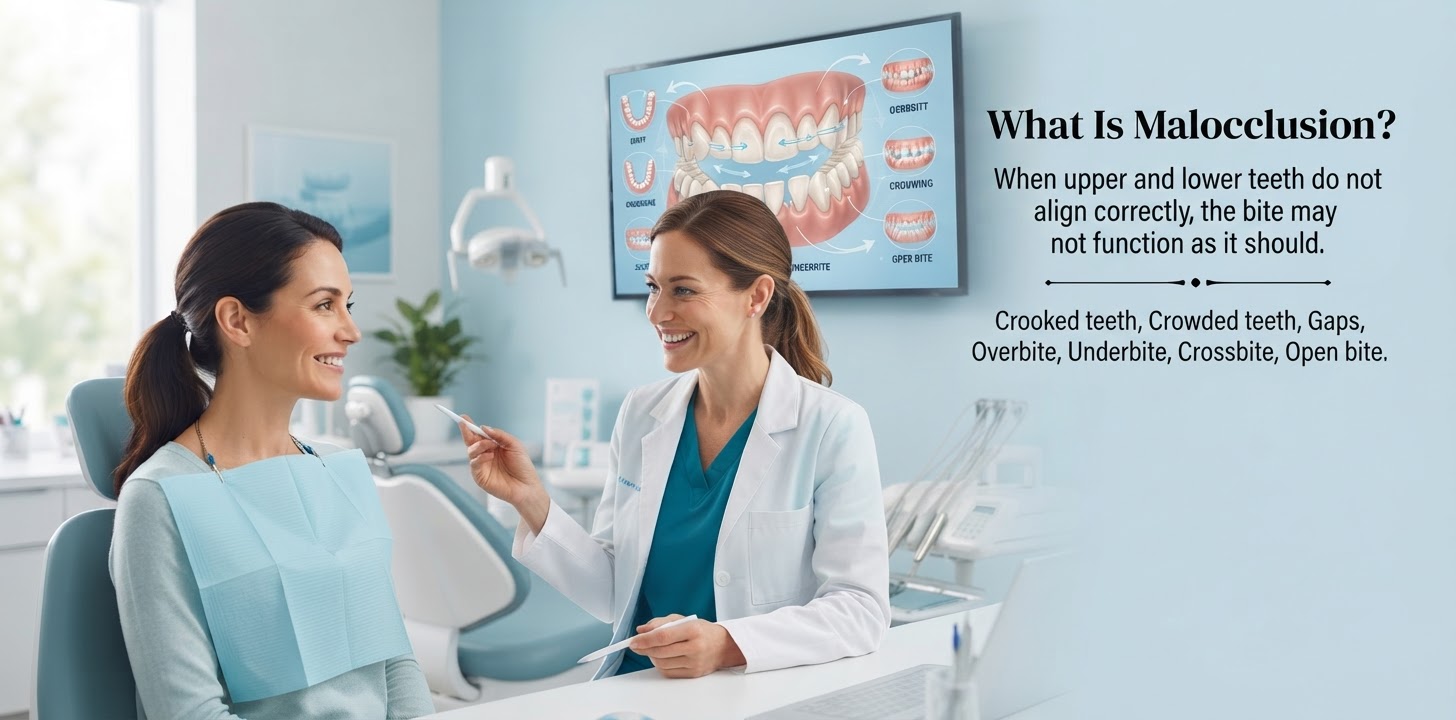
What Is Malocclusion?
Malocclusion means that the upper and lower teeth are not aligned correctly when the mouth is closed. In an ideal bite, the upper teeth should slightly overlap the lower teeth, and the molars should fit together in a balanced way. When this relationship is off, the bite may not function as it should.
Malocclusion can involve:
- Crooked teeth
- Crowded teeth
- Gaps between teeth
- Overbite
- Underbite
- Crossbite
- Open bite
- Jaw misalignment
Some patients notice malocclusion because of smile appearance, while others experience functional issues like difficulty chewing or jaw discomfort. That is why malocclusion correction Dubai often focuses on both health and aesthetics.
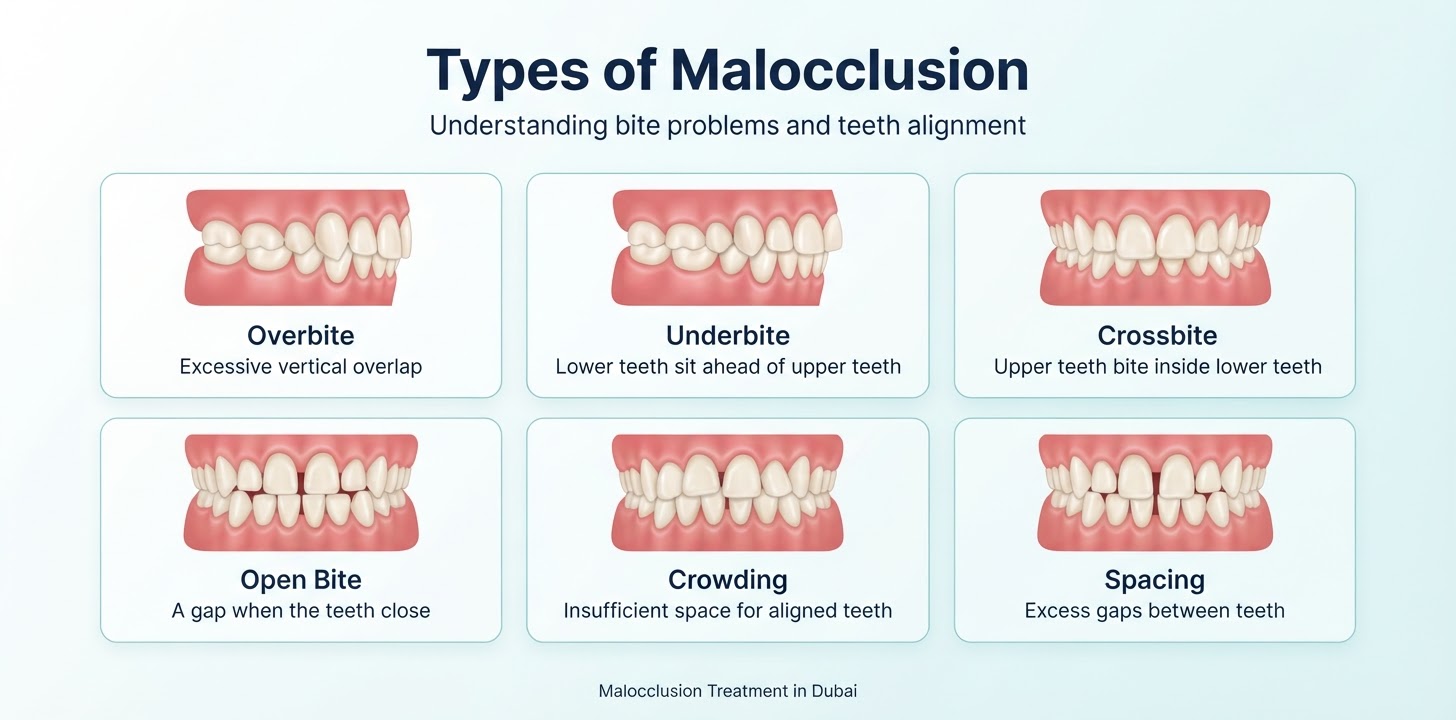
Types of Malocclusion
Understanding the type of bite problem is essential for choosing the right malocclusion treatment in Dubai.
Overbite (Deep Bite)
What it is: An overbite exists when the upper front teeth overlap the lower front teeth more than they should. Some overlap is normal — roughly 2–3 mm. Beyond that, it’s classified as a deep overbite.
Why it happens:
- Genetic jaw shape, where the lower jaw is shorter than ideal
- A strong, overactive lip and chin muscle pattern
- Grinding or clenching habits that drive teeth deeper
- Loss of back-teeth height through wear
Symptoms to watch for:
- Lower front teeth biting into the roof of the mouth, sometimes leaving visible marks
- Gum irritation or recession behind the upper front teeth
- Accelerated tooth wear along the biting edges
- Jaw or muscle strain, headaches, and clicking in the joint
- In severe cases, the lower teeth can strike the palate hard enough to cause pain
Why it matters: A deep overbite is not just cosmetic. Untreated, it can wear away enamel permanently, damage gum tissue, and overload the temporomandibular joint (TMJ).
Treatment: It depends on whether the cause is dental or skeletal, and how much vertical correction is needed. Options include:
- Braces with bite-opening mechanics — the classic approach for growing patients
- Clear aligners for mild to moderate cases, often with attachments to help intrude the front teeth
- Anterior bite ramps or bite plates, which prevent the lower teeth from closing too far
- TADs (temporary anchorage devices) — small titanium screws used as anchors to move teeth vertically in adults
- Jaw surgery in severe skeletal cases where the lower jaw must be repositioned
Treatment timelines typically run 12–24 months, depending on complexity.
Underbite (Anterior Crossbite)
What it is: The lower front teeth sit in front of the upper front teeth — the reverse of a normal bite. It’s called a Class III malocclusion.
Why it happens:
- Skeletal — the lower jaw is too long, or the upper jaw is underdeveloped (the most common cause)
- Dental — the teeth are tipped incorrectly even though the jaws are fine
- Pseudo-Class III — the lower jaw shifts forward to avoid interference from a tooth, which is a functional (habitual) pattern
- Habits such as prolonged thumb-sucking, or airway issues that encourage a forward tongue and jaw posture
Symptoms to watch for:
- A prominent chin or a “bulldog” facial profile
- Difficulty biting into food with the front teeth
- Uneven wear on the front teeth
- Speech sounds that are slightly affected
- Jaw joint discomfort from the forced forward posture
Why it matters: This is often the type most worth catching early. In a growing child, the jaw is still moldable. In an adult, the bone has set.
Treatment:
- Early intervention (ages 6–10) — a facemask or reverse-pull headgear to bring the upper jaw forward; this is most effective before puberty
- Growth modification in adolescents
- Braces or aligners for dental underbites and mild skeletal cases, sometimes with tooth extraction for camouflage
- Jaw surgery (orthognathic surgery) for adults with a significantly long lower jaw or underdeveloped upper jaw — usually performed after orthodontic preparation, and the orthodontics continue after surgery
In younger patients, correction can sometimes take only 6–12 months. Adult surgical cases typically involve 18–24 months of orthodontics split around the surgery.
Crossbite
What it is: Some upper teeth sit inside the lower teeth rather than outside them. It can affect the front teeth (anterior crossbite), the back teeth (posterior crossbite), or both.
Two sub-types matter clinically:
- Anterior crossbite — one or more upper front teeth bite behind the lower ones. Often caused by a tooth erupting in the wrong position.
- Posterior crossbite — the back teeth on one or both sides don’t interlock correctly; a unilateral posterior crossbite often comes with a sideways shift of the lower jaw when closing.
- Buccal vs. lingual crossbite — describing whether the upper teeth are displaced outward or inward relative to the lower.
Why it happens:
- A narrow upper jaw (maxillary constriction) — one of the most frequent causes
- Crowded or ectopically erupting teeth
- Prolonged thumb or finger sucking
- Mouth breathing, which is associated with narrow palatal development
Symptoms to watch for:
- Asymmetric smile or facial appearance
- Uneven tooth wear, especially on canines and back teeth
- Jaw shifting or clicking on closing
- Sensitivity from teeth that are biting against each other instead of fitting into a groove
Why it matters: An untreated crossbite can lead to asymmetric jaw growth in children, and in adults it can wear down enamel unevenly and unsettle the jaw joint.
Treatment:
- Palatal expansion — a rapid palatal expander (RPE) in children and adolescents, or a surgically assisted expansion (SARPE) in adults, whose palatal suture has already fused
- Braces or aligners to correct individual teeth once the arch has been widened
- Elastics to pull teeth into the correct relationship
- Cross elastics for anterior crossbites where only a tooth or two are involved
Palatal expansion is most predictable before the mid-teens, which is why early screening for crossbite is valuable.
Open Bite
What it is: The upper and lower teeth do not meet when the mouth closes, leaving a gap. It can be anterior (front gap) or posterior (side gap).
Why it happens:
- Thumb sucking, finger sucking, or prolonged pacifier use — a very common cause in children
- Tongue thrusting — the tongue pushes forward against the front teeth when swallowing or speaking
- Skeletal pattern — a vertical growth pattern where the jaws grow in a way that doesn’t allow closure
- Airway problems — chronic mouth breathing from enlarged tonsils or adenoids, which encourages the tongue to sit low and the jaws to grow apart
- Habitual — sometimes there’s no structural cause at all
Symptoms to watch for:
- Visible gap between the front teeth when biting
- Difficulty biting through food — you have to tear at it
- Speech issues, especially with “s” and “t” sounds (a lisp)
- Mouth breathing and dry mouth
- Tooth wear on the back teeth, which take all the load
Why it matters: Anterior open bites are frustrating to treat and prone to relapse if the underlying habit or airway problem isn’t addressed first. Simply closing the gap with braces without treating the tongue habit usually fails.
Treatment:
- Habit-breaking — behavioural work, reminders, or an appliance to stop thumb sucking
- Tongue cribs or spurs — small appliances that block the tongue from thrusting forward
- Myofunctional therapy — targeted exercises to retrain the tongue, lips, and swallowing pattern
- Correction of airway issues — referral to an ENT where mouth breathing or enlarged adenoids are involved
- Anterior elastics with braces, used carefully, to extrude the front teeth
- TADs / miniscrews for more controlled vertical movement in adults
- Jaw surgery for severe skeletal open bites
Treatment duration is often 18–30 months, with a longer retention plan because of the relapse risk.
Crowding
What it is: There is not enough space in the jaw for all the teeth to align properly. Teeth end up rotated, overlapping, or pushed out of the arch. Crowding is one of the most common reasons patients seek teeth alignment Dubai care.
Severity is usually graded clinically:
- Mild — 1–2 mm of space shortage; teeth slightly rotated
- Moderate — 3–4 mm shortage; visible overlapping
- Severe — more than 5 mm shortage; teeth significantly displaced, possibly impacted
Why it happens:
- Genetic size mismatch between tooth size and jaw size — the single biggest factor
- Premature loss of baby teeth, causing adult teeth to drift into the wrong position
- Late loss of baby teeth that block eruption paths
- Supernumerary (extra) teeth or missing teeth shifting neighbours
- Wisdom teeth in some cases, though their role is debated
- Adult drifting after tooth loss or gum disease
Symptoms to watch for:
- Overlapping or rotated teeth that are hard to floss
- Higher plaque and tartar buildup, leading to more cavities and gum inflammation
- Difficulty cleaning between teeth, and bad breath
- Food trapping
- A smile that looks uneven or “bunched up”
Why it matters: Beyond appearance, crowding is a dental health problem. Misaligned teeth are harder to clean, which increases the risk of decay and periodontal disease.
Treatment:
- Braces — traditional metal, ceramic, or lingual (behind the teeth)
- Clear aligners — highly effective for mild to moderate crowding and a common choice for adults
- Interproximal reduction (IPR) — shaving fractions of a millimetre between teeth to gain space
- Palatal expansion where a narrow arch is the cause
- Extraction of one or more premolars to create room in severe cases
- Serial extraction in growing children, in selected cases
- Retainers afterwards — crowding recurs, so retention is not optional
Timelines range from 6–9 months for mild alignment cases to 18–24 months for comprehensive treatment.
Spacing (Diastema and Generalized Gaps)
What it is: Excessive gaps between teeth. The most familiar form is a midline diastema — a gap between the two upper front teeth — but spacing can appear anywhere in the arch.
Why it happens:
- Genetic tooth-size-to-jaw-size mismatch in the opposite direction to crowding: the teeth are small relative to the jaw
- Missing teeth (congenitally missing lateral incisors are common) letting neighbours drift
- Small teeth (microdontia)
- Frenum attachment — a thick band of tissue (the labial frenum) running between the upper front teeth can keep them apart
- Tongue thrusting pushing teeth forward
- Periodontal disease in adults, where bone loss lets teeth migrate and spread
- Habits such as pencil chewing or nail biting
Symptoms to watch for:
- A visible gap, especially between the front teeth
- Food packing between teeth
- Whistling or air escape in speech in some cases
- Tooth mobility if gum disease is the underlying cause
Why it matters: Spacing is not only aesthetic. Gaps trap food, can affect speech, and — when driven by periodontal disease — signal a condition that needs treatment in its own right.
Treatment:
- Braces or aligners to close gaps and redistribute space
- Frenectomy — minor surgical release of a thick frenum that’s holding teeth apart, sometimes needed alongside orthodontics
- Bonded retainers to hold the teeth together afterwards
- Composite bonding or veneers to close small gaps without moving teeth
- Dental implants where teeth are missing, to close gaps and restore function
- Periodontal treatment first where gum disease is the cause — moving teeth in diseased tissue is not advisable
Small cosmetic gaps may be closed in a single visit with bonding. Orthodontic closure typically takes 6–18 months, depending on the number of gaps and the bite relationship.
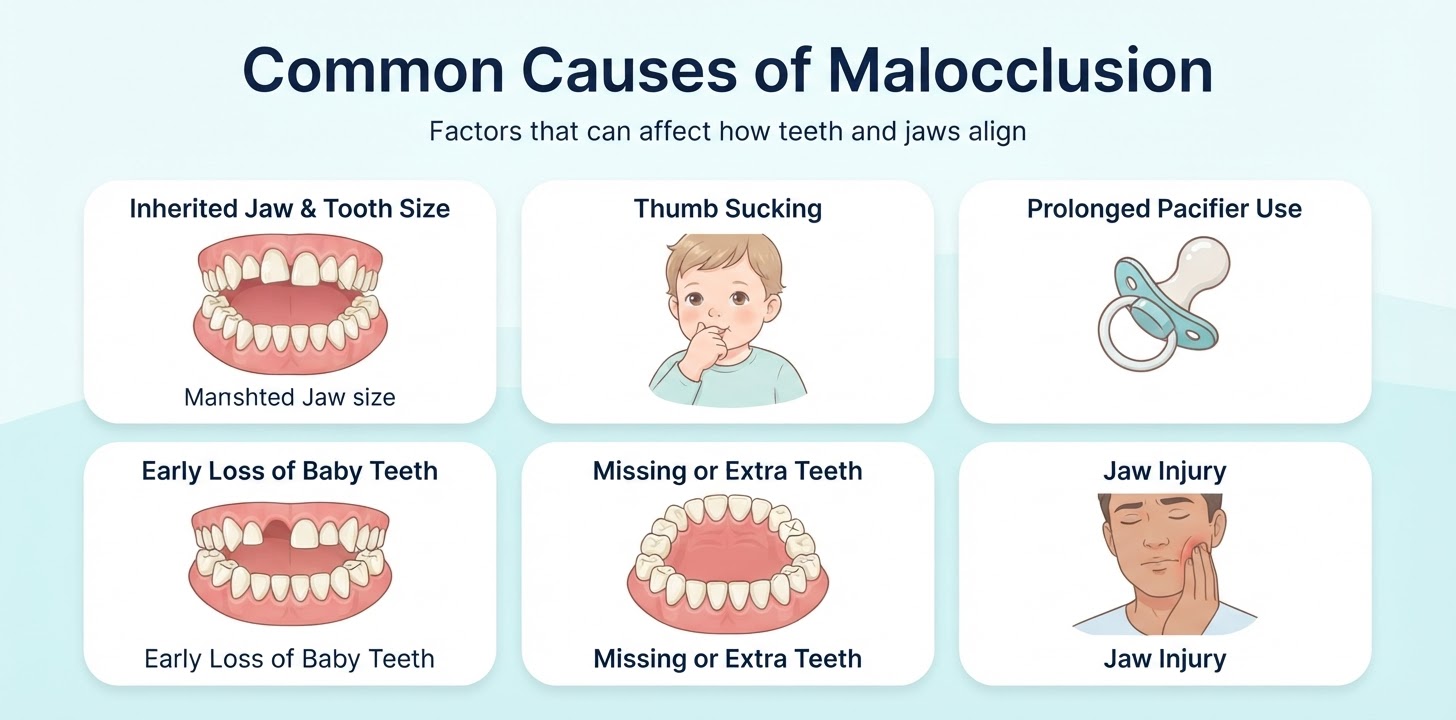
Common Causes of Malocclusion
There is no single cause of malocclusion. In many cases, it develops because of a combination of genetic and environmental factors.
Genetics
Jaw size, tooth size, and facial structure are often inherited. This means crowded teeth, overbites, or underbites can run in families.
Childhood Habits
Long-term thumb sucking, pacifier use, tongue thrusting, or prolonged bottle feeding can influence how teeth and jaws develop.
Early or Late Loss of Baby Teeth
If baby teeth fall out too early or stay too long, permanent teeth may erupt in the wrong positions.
Jaw Growth Irregularities
If the upper and lower jaws do not develop in harmony, bite problems may occur.
Trauma or Injury
Jaw injuries or dental trauma can change tooth position or jaw alignment.
Impacted or Missing Teeth
Teeth that do not erupt properly can affect the alignment of surrounding teeth and the overall bite.
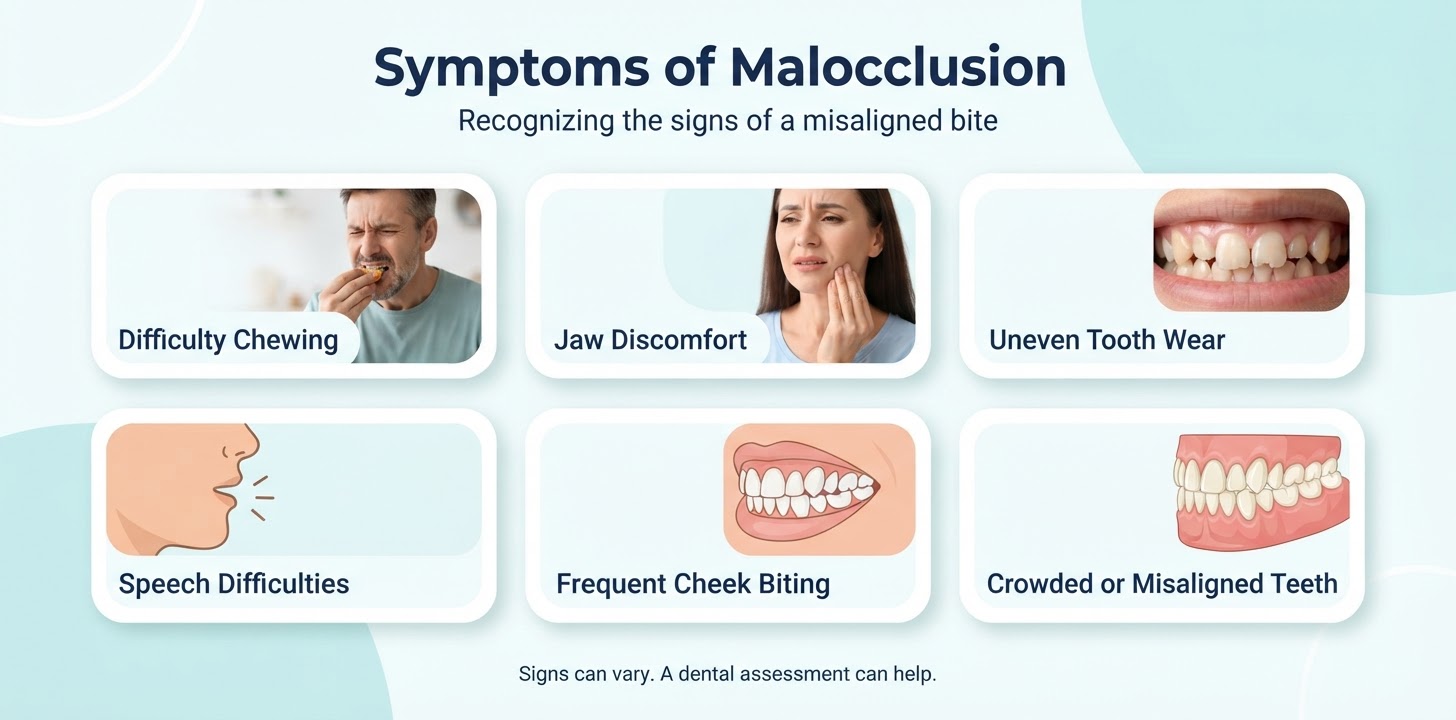
Symptoms of Malocclusion
The signs of a misaligned bite can vary depending on tooth position, jaw alignment, and the severity of the condition. Common symptoms and signs include the following.
Difficulty Chewing or Biting
Difficulty chewing may occur when the upper and lower teeth do not meet effectively. You might find it challenging to bite through certain foods, chew evenly, or bring your teeth together comfortably. Some people also notice that they consistently favour one side of the mouth when eating.
Persistent chewing problems should be assessed by a dentist, as they can also result from cavities, damaged teeth, or other dental conditions.
Jaw Discomfort
Jaw discomfort may occur alongside a bite problem. Symptoms can include soreness around the jaw, tiredness when chewing, or difficulty finding a comfortable resting bite.
However, jaw pain does not necessarily mean that malocclusion is the cause. Jaw joint disorders, muscle tension, and teeth grinding can produce similar symptoms. A professional assessment helps determine what is contributing to the discomfort rather than assuming that tooth alignment alone is responsible.
Uneven Tooth Wear
Uneven tooth wear can develop when certain teeth make more contact than others. Over time, some biting edges may appear flatter, shorter, or more worn than neighbouring teeth. In some cases, wear may be accompanied by sensitivity or small chips.
Tooth wear can also result from grinding, clenching, or acid erosion. A dentist can assess the pattern of wear and recommend care suited to its underlying causes.
Speech Difficulties
Speech difficulties can sometimes be associated with the position of the teeth and jaws. Certain bite patterns, such as an anterior open bite, may affect how the tongue and teeth interact when producing particular sounds.
Not every speech difficulty is related to malocclusion, and orthodontic treatment does not automatically resolve speech concerns. Depending on the findings, assessment by both a dental professional and a speech-language therapist may be helpful.
Frequent Cheek or Tongue Biting
Repeated cheek or tongue biting may occur when the teeth close in a way that catches nearby soft tissue. This can cause irritation, tenderness, or recurring sore areas, particularly during eating or speaking.
Occasional accidental biting is common. However, repeated injury in the same place should be checked to identify whether tooth position, a sharp tooth edge, or another issue is contributing.
Crowded or Misaligned Teeth
Visible misalignment is one of the most recognisable signs of malocclusion. Teeth may overlap, rotate, protrude, or have noticeable gaps between them. The upper and lower front teeth may also fail to meet, overlap excessively, or close in a reversed position.
Crowded teeth can make some surfaces harder to reach with brushing and interdental cleaning. Even when there is no pain, a dental assessment can help establish whether the alignment affects oral health or bite function.
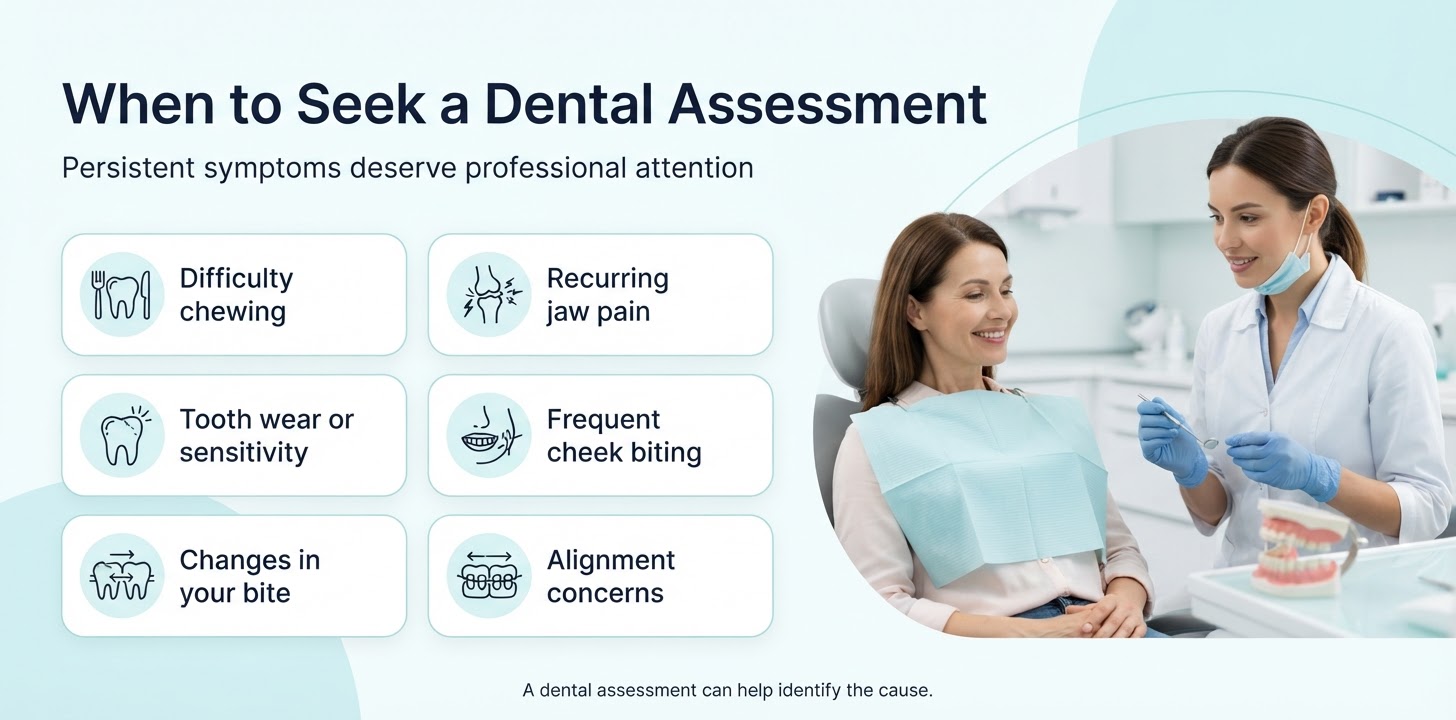
When to Seek a Dental Assessment
Persistent discomfort, difficulty chewing, or noticeable changes in how your teeth meet are reasons to arrange a dental assessment. Although some bite problems are easy to see, others may affect everyday comfort without causing obvious changes to your smile. A dentist can examine your teeth, gums, and bite to identify possible causes and determine whether treatment is needed.
You do not have to wait until symptoms become painful. Discussing concerns early can help you understand your oral health and make informed decisions about your care.
Difficulty Chewing or Biting
If biting into food feels uncomfortable or chewing requires extra effort, your teeth may not be meeting effectively. You might notice that you favour one side of your mouth, struggle with certain foods, or feel uneven pressure when biting.
Persistent chewing difficulty deserves attention because it can have several causes, including misaligned teeth, tooth decay, damaged restorations, or gum problems. A dental examination helps distinguish a bite-related concern from another condition that needs treatment.
Recurring Jaw Pain or Discomfort
Repeated soreness around the jaw, muscle fatigue during meals, or difficulty opening and closing your mouth comfortably should be assessed. Mention any clicking, catching, or locking, particularly when it occurs alongside pain or limited movement.
Jaw pain has multiple possible causes, including muscle tension, teeth grinding, and temporomandibular joint disorders. It should not automatically be attributed to malocclusion, and straightening the teeth is not a guaranteed solution. A thorough assessment helps guide appropriate care.
Tooth Wear or Sensitivity
Teeth that appear flatter, shorter, chipped, or more worn on one side may indicate an uneven pattern of contact. You may also experience sensitivity when eating hot, cold, or sweet foods.
Uneven wear and sensitivity can be associated with several issues, such as grinding, acid erosion, decay, or exposed root surfaces. Your dentist can check the affected teeth, assess how your bite distributes pressure, and recommend ways to address the cause.
Frequent Cheek or Tongue Biting
Occasionally biting your cheek or tongue is common, but repeated injury in the same area is worth discussing with a dentist. Tooth position, a sharp edge, or a damaged filling may be catching the soft tissue when you eat or speak.
Recurring irritation should not be ignored, especially if it makes eating uncomfortable. An ulcer or sore area that has not healed within two weeks should also be examined rather than assumed to be caused by accidental biting.
Changes in Your Bite
Arrange a dental visit if your teeth suddenly meet differently or you can no longer close your mouth comfortably. You might notice that one tooth touches before the others, a new gap has appeared, or your usual bite feels unfamiliar.
A new bite change may follow dental work, tooth movement, tooth loss, or injury, among other causes. Tell your dentist when the change began and whether it is accompanied by pain, swelling, or a loose tooth. A sudden change after an injury requires prompt attention.
Concerns About Tooth Alignment
Crowded, overlapping, protruding, or widely spaced teeth can be assessed even when they do not cause pain. You may also notice that the front teeth overlap excessively, sit in a reversed position, or leave a gap when the back teeth close.
Alignment concerns are not only about appearance. An assessment can determine whether tooth position affects chewing, soft tissues, or access for cleaning. Not every irregularity requires treatment; recommendations should reflect your oral health, bite function, and preferences.
What Happens During a Dental Assessment?
A dental assessment usually begins with a discussion of your symptoms, dental history, and concerns. Your dentist will examine your teeth and gums, check how your upper and lower teeth meet, and assess jaw movement where relevant.
Depending on the findings, the assessment may include:
- Bite checks to identify areas of uneven contact.
- Examination of worn or sensitive teeth to investigate possible causes.
- Photographs, digital scans, or impressions to record tooth positions when needed.
- Dental X-rays, when clinically indicated, to assess structures not visible during the examination.
- An orthodontic referral if specialist assessment of tooth or jaw alignment would be helpful.
The findings should guide a discussion of your options, which may include monitoring, preventive care, treatment of an underlying dental problem, or orthodontic care.
When to Seek Urgent Care
Some symptoms need prompt attention rather than a routine appointment. Seek urgent dental care for severe or worsening pain, facial swelling, a knocked-out or significantly loosened tooth, or a jaw that becomes locked. A bite change following facial trauma should also be assessed promptly.
Difficulty breathing or swallowing, particularly with swelling of the mouth or neck, requires emergency medical care.
Dental Assessment for Malocclusion in Dubai
If you are considering malocclusion treatment in Dubai, a dental or orthodontic assessment is the starting point. Treatment decisions should be based on the cause and severity of the problem, the health of your teeth and gums, and your individual goals.
Whether your concern is discomfort, chewing difficulty, or tooth alignment, an assessment can help clarify what is happening and which next steps are appropriate.
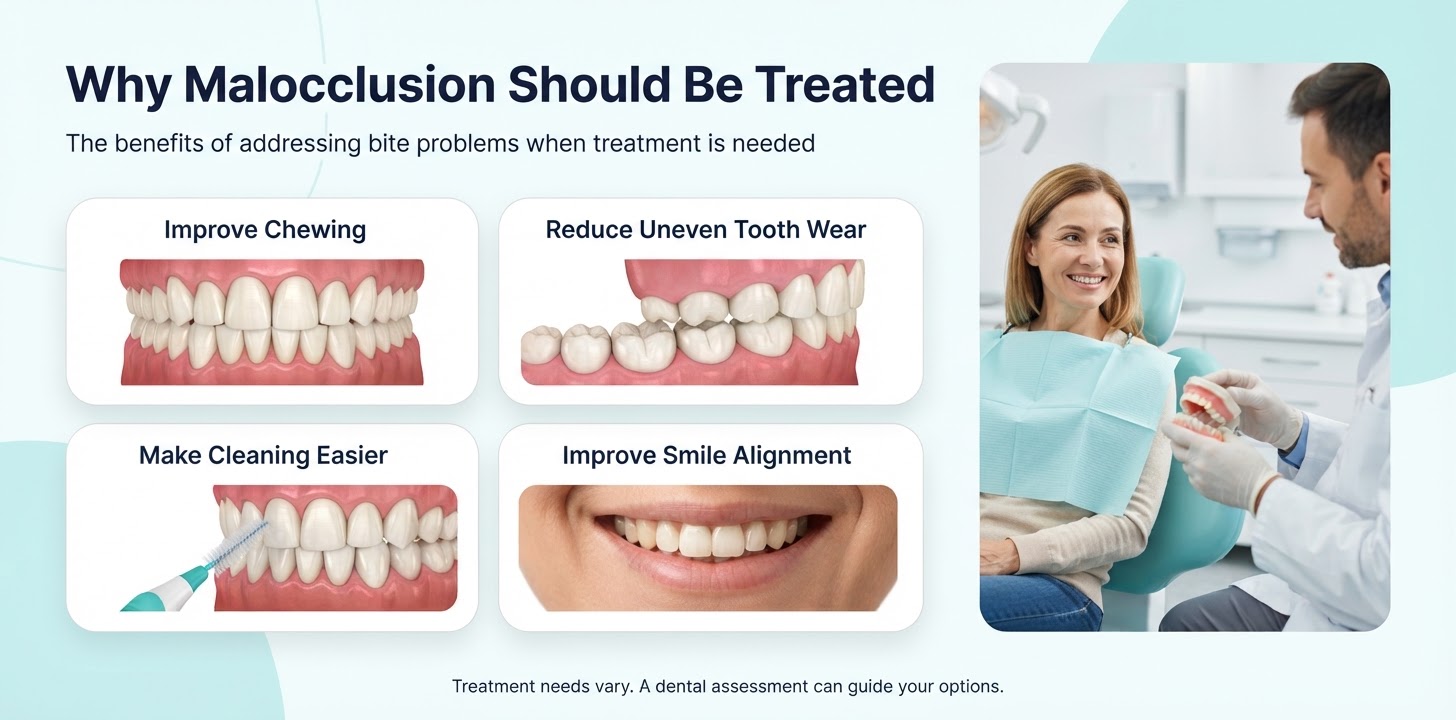
Why Malocclusion Should Be Treated
Many people assume orthodontic care is only cosmetic, but bite correction can offer significant health benefits.
Improved chewing function
A properly aligned bite helps distribute chewing forces more evenly.
Reduced tooth wear
Misaligned teeth may place abnormal pressure on certain areas, leading to premature enamel wear.
Better oral hygiene
Crowded or overlapping teeth can be harder to clean, increasing the risk of plaque buildup.
Improved speech
Some bite problems may affect pronunciation and clarity.
Better jaw comfort
A balanced bite may reduce unnecessary stress on the jaw joints and surrounding muscles.
Enhanced smile aesthetics
Straightening teeth and improving bite harmony often boosts confidence.
This is why bite correction Dubai is not just about looks. It can improve day-to-day comfort and long-term dental health.
How Malocclusion Is Diagnosed
Before recommending any malocclusion treatment in Dubai, a thorough dental and orthodontic assessment is needed. Diagnosis may include:
- Clinical examination
- Bite analysis
- Digital scans or impressions
- X-rays
- Photographs
- Facial and jaw evaluation
This helps determine whether the issue is mainly dental, skeletal, or a combination of both. Accurate diagnosis is the foundation of effective malocclusion correction Dubai planning.
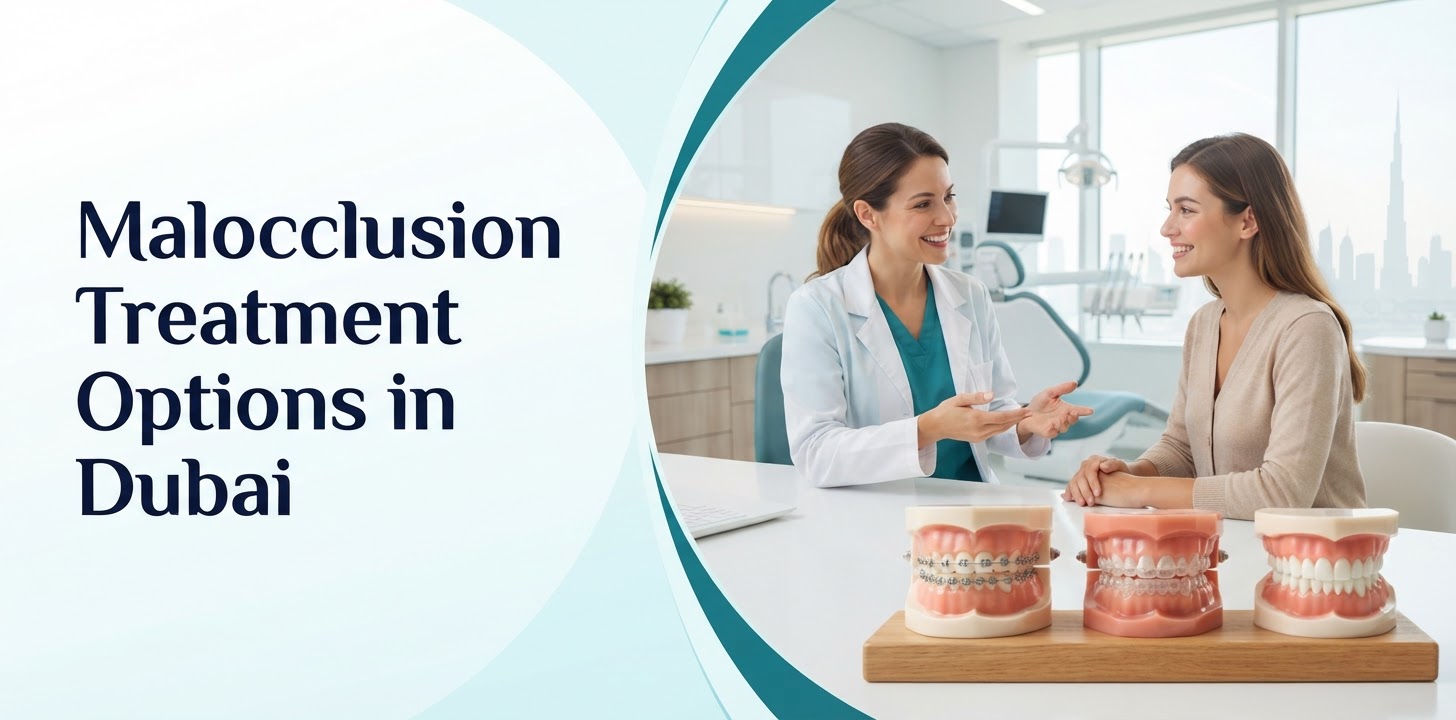
Malocclusion Treatment Options in Dubai
Treatment depends on the type and severity of malocclusion, patient age, jaw development, and oral health status. Common options include the following.
Braces for Malocclusion
Braces for malocclusion Dubai remain one of the most effective and versatile treatment methods. Braces use brackets and wires to gradually move teeth into better alignment and improve bite relationships.
Braces may be recommended for:
- Crowding
- Spacing
- Overbite
- Underbite
- Crossbite
- Open bite
- Complex tooth movement
Metal braces and ceramic braces are common choices. In some cases, elastics may be used to improve the relationship between the upper and lower jaws.
Benefits of braces
- Precise tooth control
- Effective for simple and complex cases
- Suitable for teens and adults
- Reliable bite correction
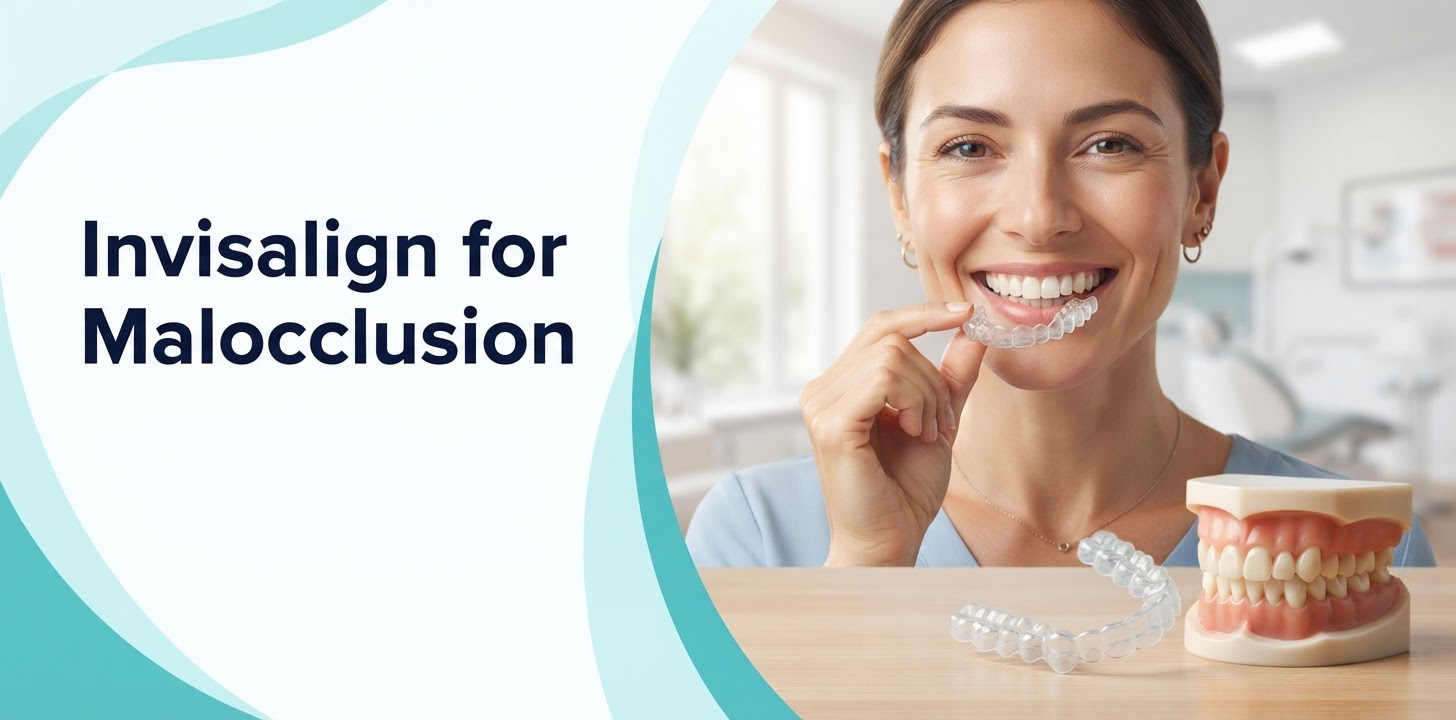
Invisalign for Malocclusion
Invisalign for malocclusion Dubai is a popular option for patients seeking a more discreet treatment. Clear aligners are custom-made trays that gradually shift the teeth over time.
They may be suitable for:
- Mild to moderate crowding
- Spacing issues
- Selected bite correction cases
- Adults and teens looking for a less visible alternative to braces
Benefits of Invisalign
- Nearly invisible appearance
- Removable for eating and oral hygiene
- Smooth and comfortable design
- Convenient for many lifestyles
Not every severe case can be treated with aligners alone, so patient selection is important.
Early Orthodontic Treatment for Children
Child malocclusion treatment Dubai often focuses on early intervention. If bite problems are identified while the jaws are still growing, orthodontists may use appliances to guide development and reduce future complications.
Early treatment may help with:
- Crossbite correction
- Jaw growth guidance
- Space management
- Harmful oral habits
- Eruption guidance
This phase of care can reduce the complexity of later treatment in some children.
Tooth Extraction in Selected Cases
When there is severe crowding or a need to create space for proper alignment, tooth extraction may be part of the treatment plan. This is not necessary in every case, but it can be useful when carefully planned.
Extraction is usually considered only when it supports better bite balance and long-term stability.
Jaw Correction for Severe Skeletal Malocclusion
Some cases of malocclusion are caused mainly by jaw position rather than tooth position. In severe skeletal problems, orthodontics alone may not be enough. These cases may require jaw correction in combination with braces.
This may apply to:
- Severe underbite
- Significant overbite linked to jaw structure
- Facial asymmetry
- Major jaw alignment issues
Advanced cases require detailed planning to improve both function and facial balance.

Malocclusion Treatment for Children, Teens, and Adults
Children
Children benefit from early assessment because jaw growth can still be guided. Some problems are easier to correct before growth is complete.
Teenagers
Teen treatment often focuses on comprehensive orthodontics once most permanent teeth have erupted. This is a common time to address crowding and bite issues effectively.
Adults
Adult malocclusion treatment Dubai is increasingly common. Adults may choose braces or clear aligners depending on the condition and lifestyle preferences. Even when jaw growth is complete, excellent results are often possible with modern treatment planning.
How Long Does Malocclusion Treatment Take?
The duration of malocclusion treatment in Dubai depends on the complexity of the case.
General treatment timelines may include:
- Mild cases: several months
- Moderate cases: around 12 to 24 months
- Complex cases: 18 months or longer
- Surgical cases: longer overall timelines with orthodontic preparation and follow-up
A customized consultation is the best way to understand the expected timeline for your case.

Life After Malocclusion Treatment
Once active treatment is complete, retainers are usually needed to help maintain the new tooth positions. Retention is an important part of long-term success.
After treatment, patients often notice:
- Easier cleaning
- More comfortable biting and chewing
- Improved facial harmony
- A more confident smile
- Better overall oral function
Good oral hygiene and follow-up care help protect the final result.
How to Choose the Right Provider for Malocclusion Treatment in Dubai
If you are comparing clinics for malocclusion treatment in Dubai, consider the following:
- Experience with different types of bite problems
- Clear explanation of diagnosis
- Personalized treatment planning
- Access to braces and aligner options
- Honest discussion of expected outcomes
- Strong follow-up and retention support
The best treatment plan is always based on your bite, jaw structure, age, and goals rather than a generic approach.
Why Patients Search for Malocclusion Treatment in Dubai
Most patients searching for malocclusion treatment in Dubai are looking for one or more of these outcomes:
- Straighter teeth
- Better bite alignment
- Relief from chewing or jaw discomfort
- Improved smile aesthetics
- Solutions for overbite, underbite, or crossbite
- A long-term orthodontic plan
That is why a strong SEO-optimized blog on this topic should address both medical function and cosmetic improvement.
FAQ: Malocclusion Treatment in Dubai
Malocclusion is a condition where the upper and lower teeth do not align properly when the mouth is closed. It can involve crowding, spacing, overbite, underbite, crossbite, or open bite.
The best treatment depends on the type and severity of the bite problem. Common options include braces, clear aligners, early orthodontics for children, and advanced correction for severe skeletal cases.
Yes, Invisalign for malocclusion Dubai can help in many mild to moderate cases. More severe bite problems may require braces or combined treatment.
Not always. Braces may be better for complex tooth movements and more severe bite problems, while Invisalign may work well for selected cases. The right option depends on diagnosis.
Children should have an early orthodontic evaluation if a bite problem is visible. Teenagers and adults can also be treated successfully.
No. It can improve chewing, jaw comfort, speech, oral hygiene, and tooth wear, in addition to smile appearance.
Treatment time varies from several months to a few years depending on the complexity of the case.
Yes. Many adults choose orthodontic treatment to correct bite problems and improve smile alignment.
No. Some cases may be managed with clear aligners, early appliances, or other orthodontic methods. The best approach depends on the individual case.
Yes, in some cases malocclusion may contribute to jaw strain or discomfort because the bite is not functioning evenly.

Best Malocclusion Treatment in Dubai
Malocclusion treatment can do much more than straighten teeth. It can improve bite function, oral health, comfort, and facial balance. Whether the issue involves crowding, overbite, underbite, crossbite, or a more complex jaw discrepancy, modern orthodontic care offers a range of effective solutions for children and adults alike.
The first step is accurate diagnosis. Once the cause and type of malocclusion are clearly understood, a personalized treatment plan can help create a healthier, more balanced bite and a more confident smile. For patients seeking malocclusion correction Dubai, the right treatment approach can make a lasting difference in both appearance and everyday comfort.