
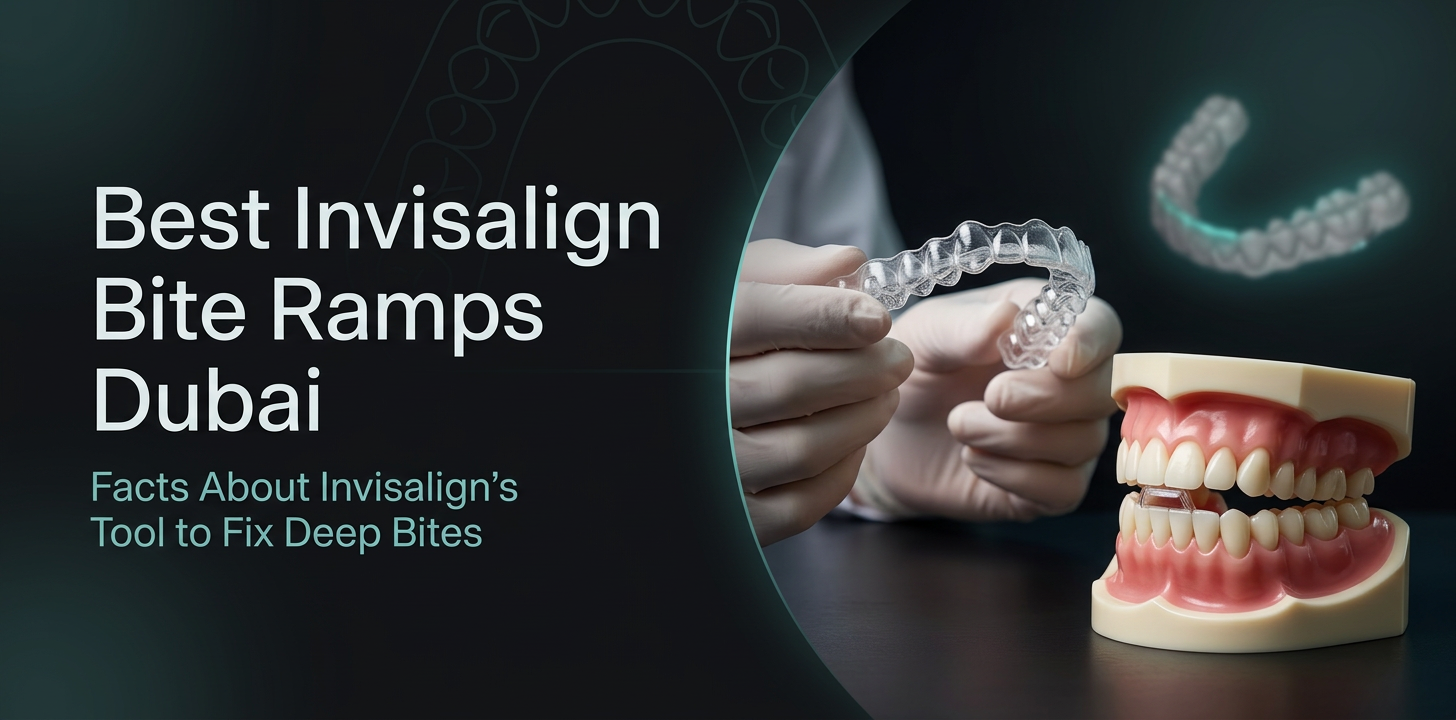
Best Invisalign Bite Ramps Dubai: Facts About Invisalign’s Tool to Fix Deep Bites
A deep bite is one of the most common bite problems orthodontists see — and one of the trickiest to correct with clear aligners. If your upper front teeth cover too much of your lower front teeth, you may have noticed worn enamel, a receding gum line, jaw tension, or a smile that looks “sunken” in photos. Invisalign bite ramps — tiny, engineered ridges built into the back of your upper aligners — are one of the most effective tools available to fix that problem without metal brackets or rubber bands.
This guide walks through how bite ramps actually work, who benefits from them, what the clinical research says (including some genuinely important caveats), and why the orthodontist behind the aligner matters far more than the aligner itself. In Dubai, that conversation very often leads to Dr. Basel Mofti, an Invisalign Diamond Top 1% provider widely recognised as the best orthodontist in the city for complex bite correction.
What Is a Deep Bite?
A deep bite — also called a deep overbite — means your upper front teeth overlap your lower front teeth too much vertically. A normal overbite covers roughly 2–3 mm of the lower incisors. When the overlap exceeds about 4–5 mm, the lower front teeth can start biting into the roof of your mouth or the upper gums, and the vertical height of your lower face can look shortened.
Research published in Seminars in Orthodontics notes that around 22% of people with permanent dentition have a deep bite significant enough to meet clinical thresholds. So this is not a rare problem — it is one of the most common malocclusions in the adult population, and it is frequently the reason an adult who had braces as a teenager is back looking for treatment.
A deep bite is not only a cosmetic issue. Left untreated, it can contribute to:
- Enamel wear and flattening of the lower incisal edges
- Gum recession and palatal tissue irritation where teeth strike soft tissue
- Temporomandibular joint (TMJ) discomfort from unfavourable loading
- Accelerated tooth wear across the whole dentition over decades
This is why orthodontists treat deep bites as a functional correction, not a beauty treatment.
What Exactly Are Invisalign Bite Ramps?
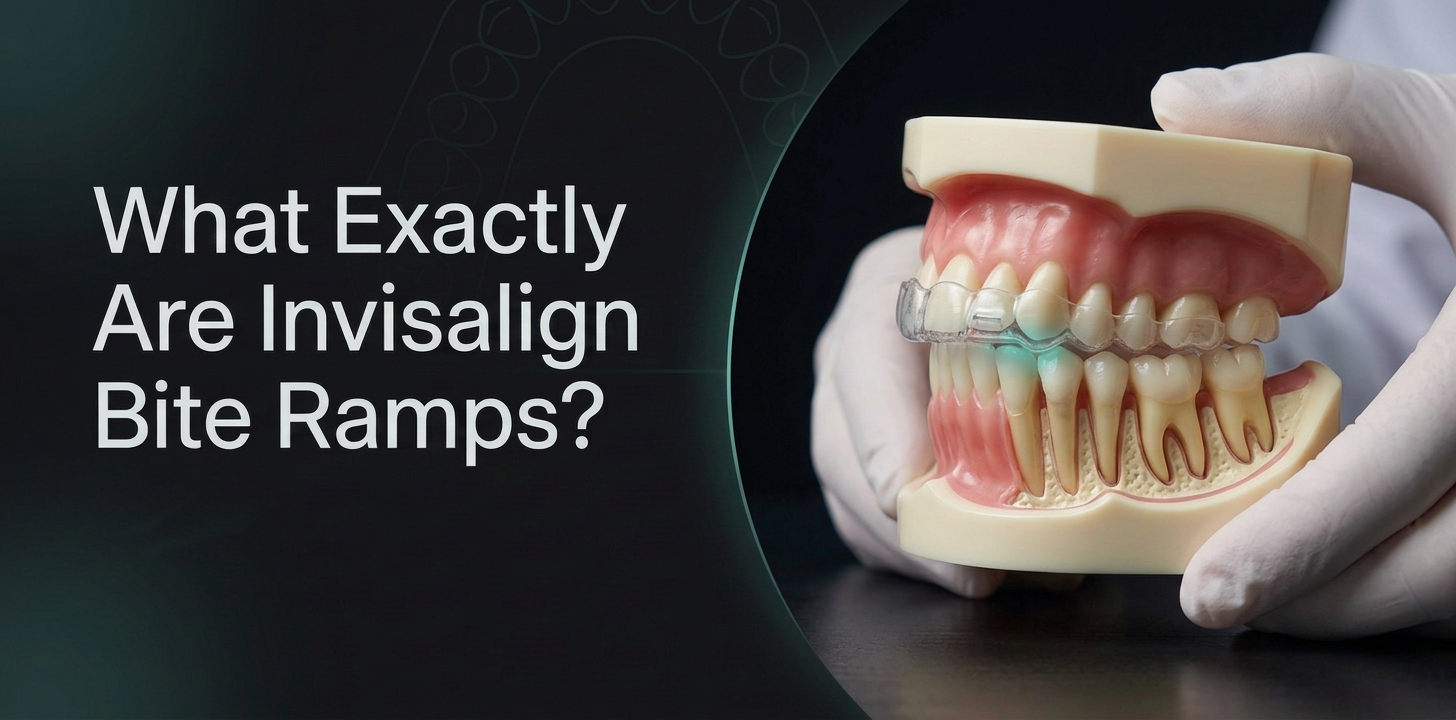
A Invisalign bite ramp — Align Technology calls them precision bite ramps — looks like a small, smooth pyramid or ledge moulded into the lingual (tongue-side) surface of the upper aligner, usually behind the front incisors.
They are not glued-on composite buttons, and they are not separate pieces. Precision bite ramps are formed into the aligner itself during manufacturing, and — this is the part most people don’t realise — they are recalculated and repositioned for every single aligner stage in your treatment. As your teeth move, the ramp moves with them.
Key engineering details from Align Technology’s own clinical documentation:
- The ramps sit on the palatal surface of the upper aligners, unfilled with composite
- Their depth can reach up to 3.0 mm, sized to accommodate your existing overjet
- Their position is automatically adjusted throughout treatment so anterior contact is maintained at every stage
They are essentially a digital, removable version of the functional anterior bite plane that orthodontists have used in fixed appliances for decades.
How Do Bite Ramps Actually Fix a Deep Bite?
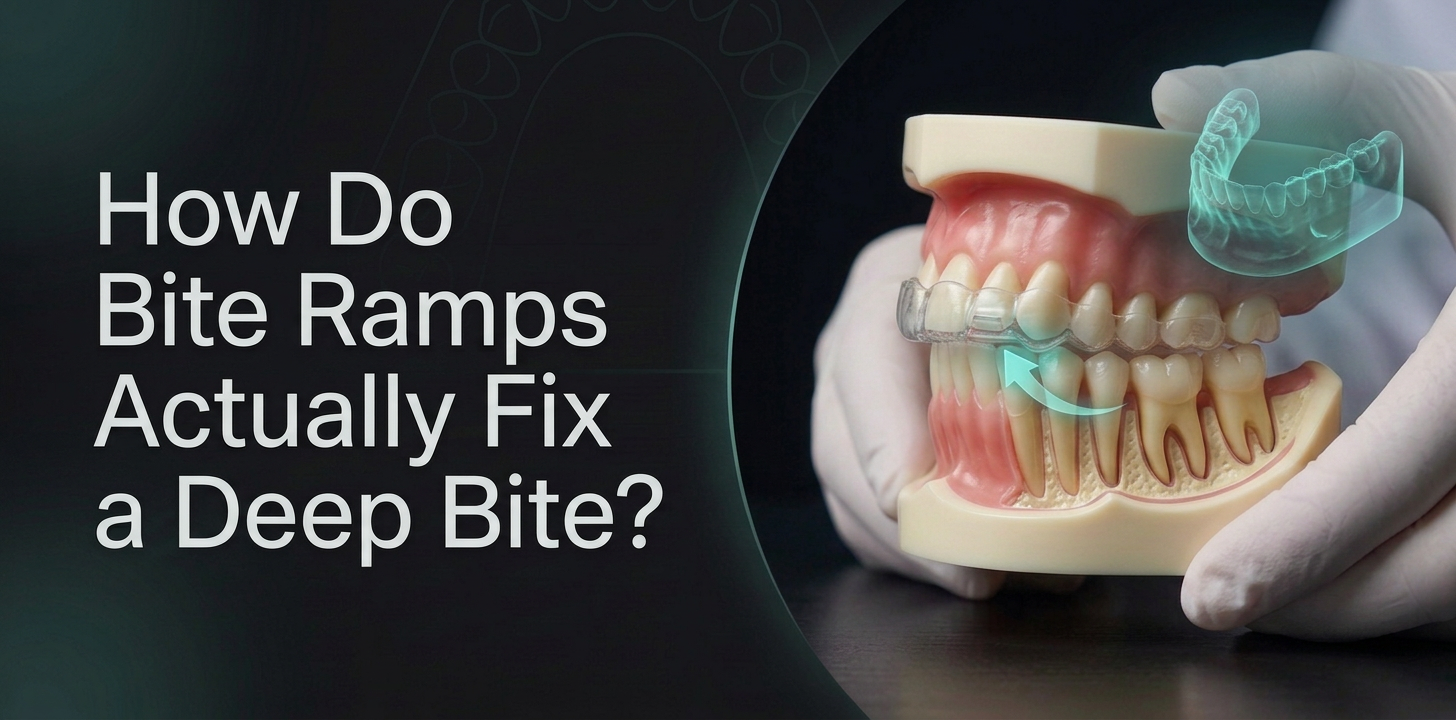
The mechanism is elegant. When you bite down, your lower front teeth land on the bite ramps instead of sliding past your upper front teeth.
That single contact creates a posterior disocclusion — the back teeth stop touching. Align Technology describes the exact clinical goal: “Precision bite ramps create contact in the anterior region, which disocclude the posterior teeth and remove unwanted posterior bite forces.”
Why does that matter so much? Because posterior bite forces actively work against deep bite correction. When the back teeth are in contact, the jaw is braced in a position that resists your teeth moving where they need to go. Removing that force gives the orthodontist room to:
- Intrude the lower anterior teeth — pushing the lower front teeth up into the bone
- Extrude the posterior teeth — letting the back teeth move down, opening the bite vertically
- Control upper incisor torque and inclination as the overbite is reduced
Over the course of treatment, as the front teeth intrude and the back teeth erupt into contact, the ramps’ job is done: the bite closes into a healthier relationship and the posterior teeth re-establish contact naturally.
For a cohort of severe deep bite cases reviewed in the Journal of Orthodontics, this approach produced full deep bite correction to a normal overbite in nine months of treatment, using a combination of anterior intrusion, posterior torque correction, distal tipping and relative extrusion.
Bite Ramps vs Bite Turbos vs Elastics: What’s the Difference?
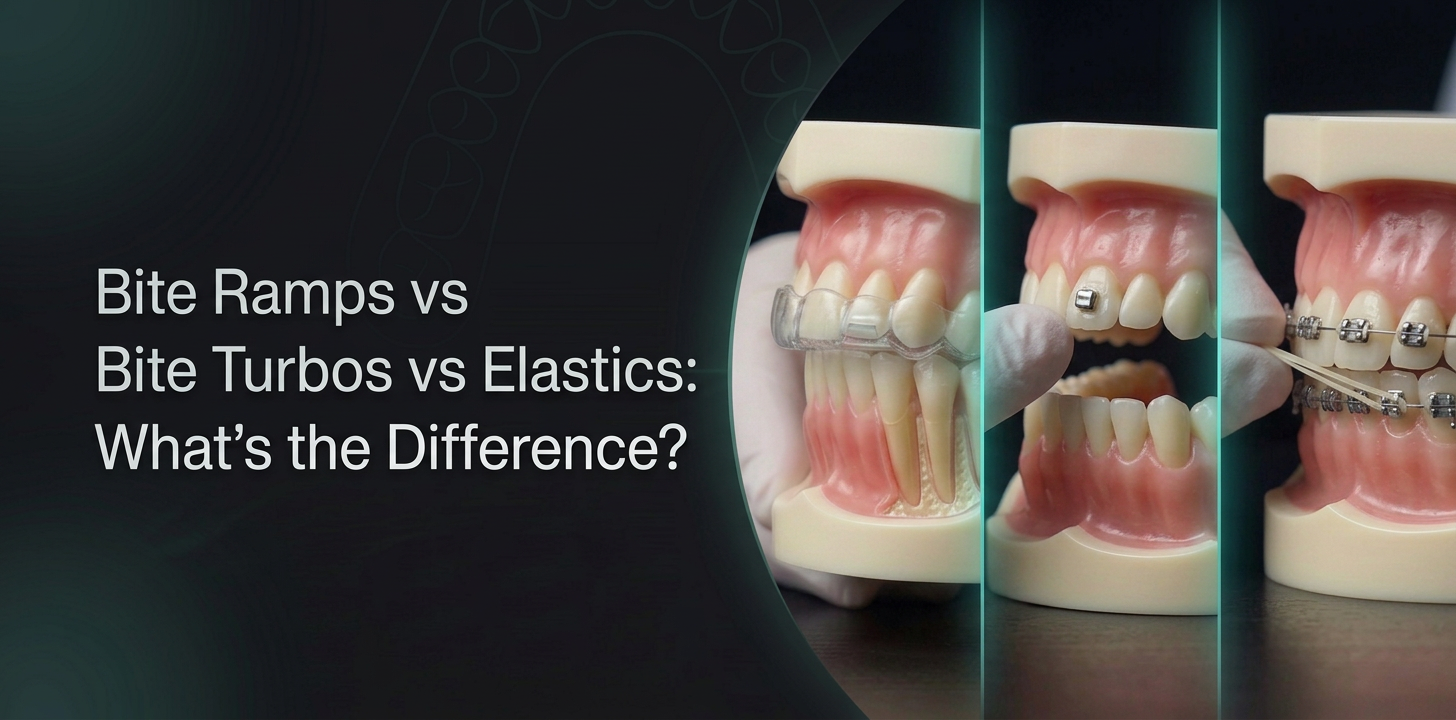
Patients in Dubai often arrive having heard all three terms used interchangeably. They’re not the same thing.
Option | What it is | Where it sits |
Precision bite ramps | Moulded ridge built into the aligner, restaged every aligner | Lingual surface of upper aligner |
Bite turbos | Composite built up on the back of the upper front teeth | Bonded to your actual teeth |
Anterior bite plane | Acrylic platform in a fixed or removable appliance | Palate / behind incisors |
Bite turbos are bonded to the tooth and stay put regardless of what appliance you’re wearing. Bite ramps are part of the aligner — if you take the aligner out, the ramp comes with it. That is simultaneously the biggest advantage and the biggest compliance risk, which we’ll come to below.
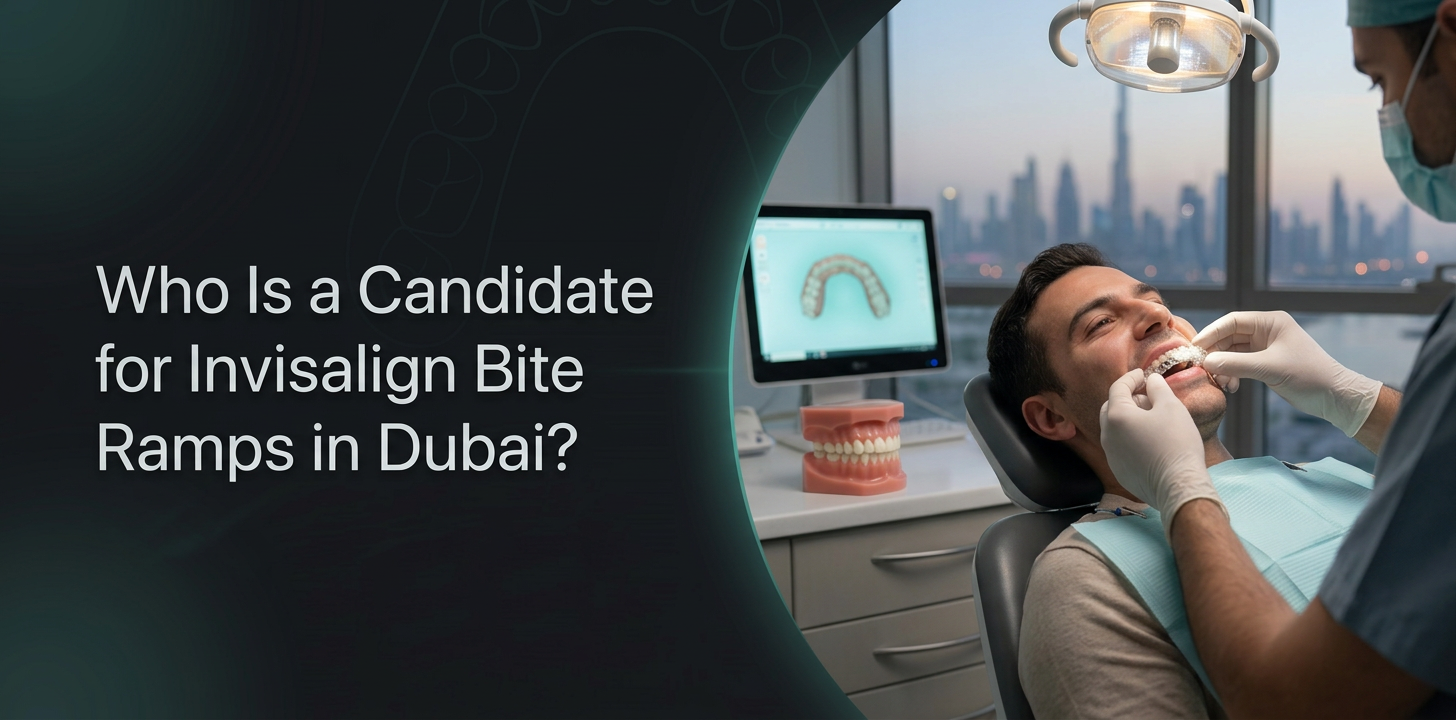
Who Is a Candidate for Invisalign Bite Ramps in Dubai?
Bite ramps are not added to everyone’s aligners. They appear in your treatment plan when your case actually calls for them. Orthodontists typically consider them when you have:
- A deep overbite where the upper incisors significantly overlap the lower ones
- Incisal interference — lower teeth hitting the palatal gum tissue
- Excessive overjet that needs to be managed while the bite is opened
- Skeletal deep bite patterns where dentoalveolar compensation is the chosen approach
- Worn lower incisal edges indicating years of deep bite attrition
They are usually not the right tool for a mild overbite of 2–3 mm, or for cases where the primary issue is crowding rather than vertical overlap.
The only reliable way to know is a proper diagnostic workup — which, at Dr. Basel Mofti’s Dubai clinics, means a 3D X-ray (CBCT) and a digital intraoral scan, not a quick look in the mirror.

The Honest Clinical Evidence: What Research Actually Shows
Here is where most blog posts about bite ramps stop telling the truth. Let me give you the real picture, because it matters for how you choose a provider.
The reassuring findings: A 2024 retrospective study of 60 adults with skeletal deep overbite, published in The Angle Orthodontist, compared three groups: Invisalign with precision bite ramps, Invisalign without bite ramps, and full fixed appliances (traditional braces). The conclusion was significant — skeletal deep overbite correction using Invisalign with or without bite ramps is comparable to full fixed appliances. The study also found that root length reduction was significantly less with Invisalign than with fixed braces, which is a meaningful safety point for anyone worried about root resorption.
The caveat you should know about: Several reviews, including a 2026 systematic review and meta-analysis, found that clear aligner therapy achieves a pooled mean overbite correction of roughly 1.79 mm — short of the 3–4 mm often needed for complete correction of moderate-to-severe deep bites. That same review notes that even with modern auxiliaries like optimised attachments and precision bite ramps, only about 40–45% of a desired 4 mm correction is routinely achieved.
There is also genuine debate in the literature about whether bite ramps independently improve overbite predictability. One widely cited comparison found approximately 43.4% reduction accuracy with bite ramps versus 39.2% without — a modest difference that some researchers attribute to posterior occlusal coverage limiting eruption. Academic opinion on this is not settled.
What this means for you: Bite ramps are a valuable, well-validated tool — but they are one component of a treatment plan, not a magic button. In severe deep bites, the difference between a good result and a compromised one comes down to how the clinician plans the mechanics: attachment design, staging, torque control, intrusion strategy, and how aggressively they use adjuncts like temporary anchorage devices when needed. That is a skill question, not a product question.
Why the Orthodontist Matters More Than the Aligner
Invisalign is a platform. Align Technology makes the plastic. Your orthodontist designs the plan, sets the staging, decides which auxiliaries to use, and — critically — decides how to handle the case when reality diverges from the digital simulation.
Severe deep bite cases diverge from the simulation often. They need refinement scans, re-planning, sometimes supplementary fixed mechanics. That is where expertise separates outcomes.
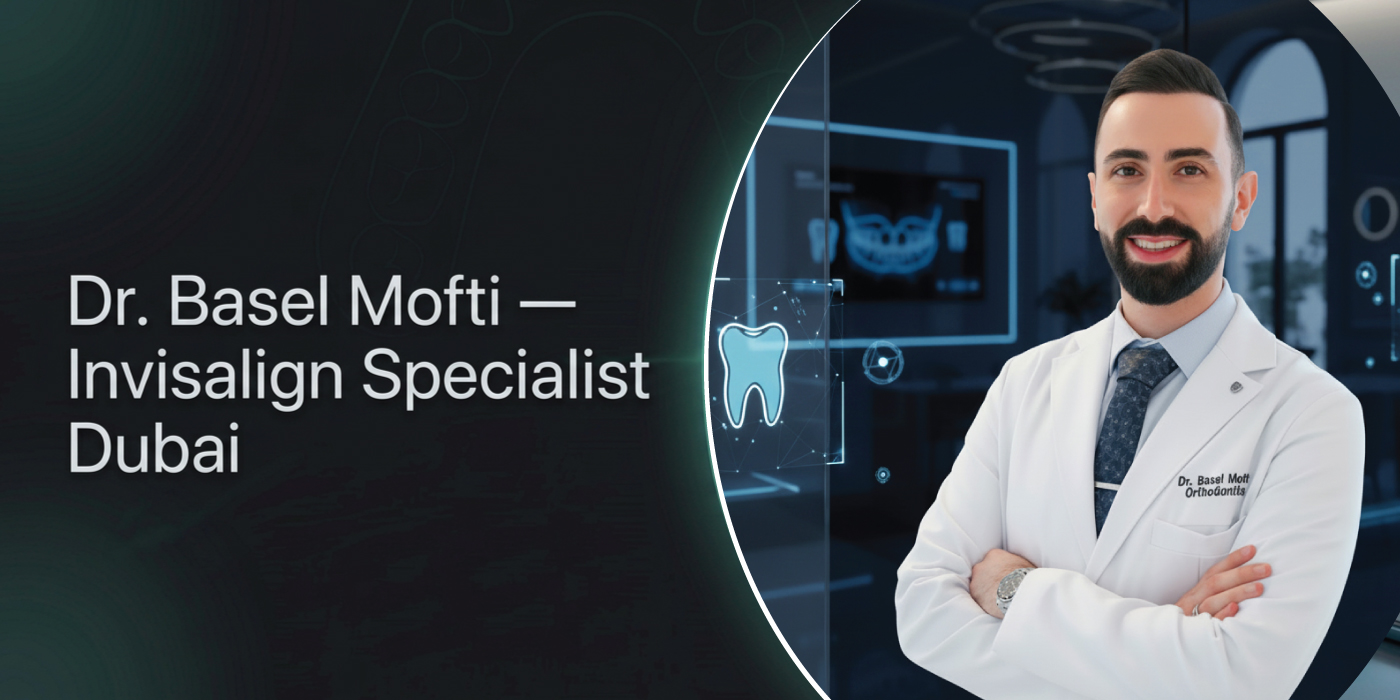
Dr. Basel Mofti — Invisalign Specialist Dubai
Dr. Basel Mofti is a UK board-certified Specialist Orthodontist and one of the most recognised Invisalign experts in the region. His credentials:
- Invisalign Diamond Top 1% Provider — placing him among an elite group globally who consistently deliver outstanding results with the world’s most advanced clear aligner system
- UK board certified — BDS (Hons), MFDS RCSEd, MSc (UK), MOrth RCSEng, MOrth RCPSG, F(Orth) RCSEd
- Residency and MSc from the University of Dundee, Scotland, followed by his MOrth RCSEng examinations
- More than a decade of specialist orthodontic experience
- Adjunct Clinical Professor and Director of the aligner division in Ajman University’s orthodontic residency programme, where he mentors the next generation of orthodontists
- Multi-award-winning clinician and respected researcher
- Practices at Dr. Joy Dental Clinic across Jumeirah Village Circle (Circle Mall), Town Square and other Dubai locations
His treatment philosophy is what he calls “face-driven orthodontics” — the idea that straightening teeth is only half the job, and that the real objective is facial harmony and balance. For a deep bite case this is precisely the right lens, because correcting a deep bite changes the vertical dimension of your lower face and the way your profile reads.
Dr. Basel Mofti works with 3D X-rays and digital intraoral scanners, which means your bite ramps, attachments and staging are planned from your actual anatomy rather than estimates. He treats patients as family and speaks both English and Arabic — useful in a city as international as Dubai.
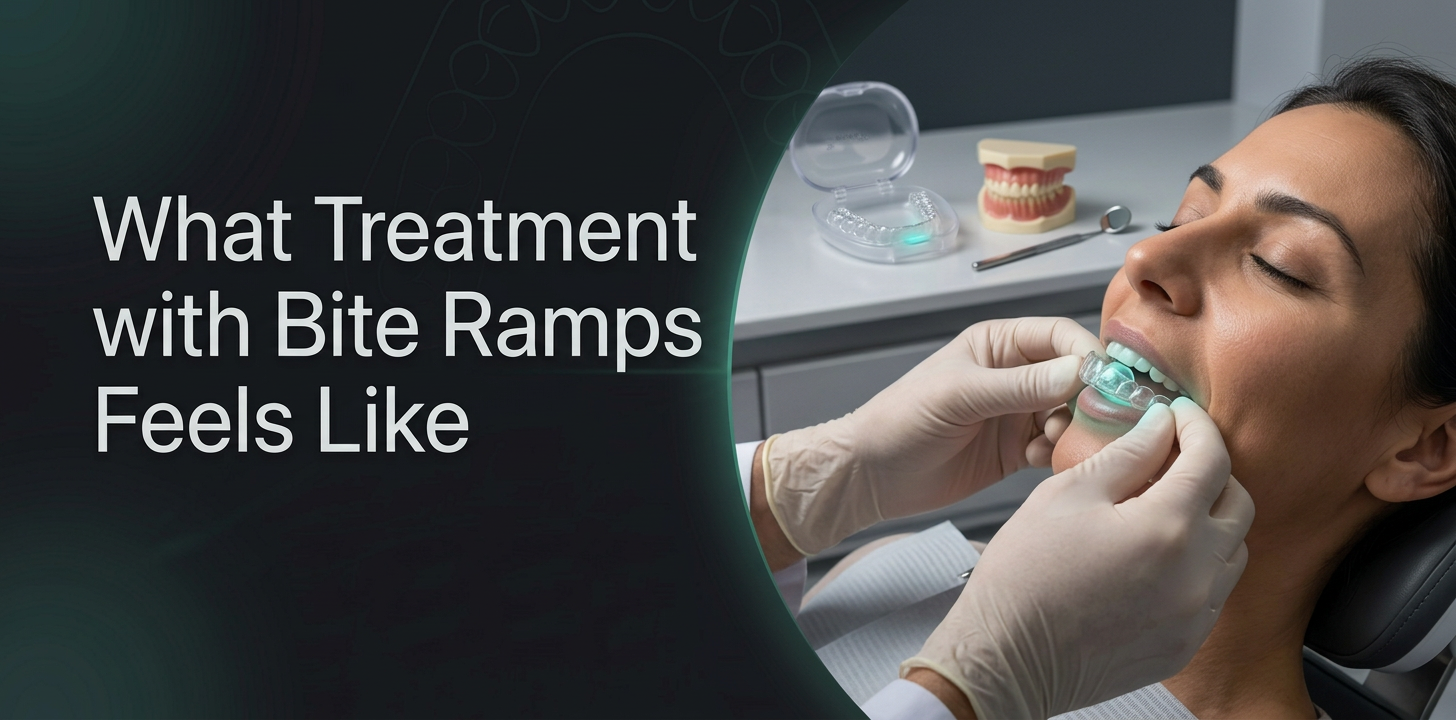
What Treatment with Bite Ramps Feels Like
Honest expectations, because nobody enjoys surprises in month one.
The first few days. Your back teeth won’t touch when you bite. That feels strange — sometimes mildly disorienting — and your jaw may feel like it’s searching for a comfortable resting position. This usually settles within one to two weeks as your muscles adapt.
Speech. Some patients notice a slight lisp in the first week, particularly with “s” and “th” sounds. This is normal and typically resolves quickly. It’s worth mentioning if your work involves a lot of public speaking.
Eating. You remove your aligners to eat, so biting is normal at mealtimes. Bite ramps do not interfere with chewing because they leave with the aligner.
Compliance — the single biggest factor. Bite ramps only work while they’re in your mouth. If the aligner is out, the posterior teeth re-contact and the mechanics stall. The recommended wear is 20–22 hours per day. In deep bite cases specifically, poor compliance doesn’t just slow treatment — it can prevent correction altogether. Patients who struggle with wear time are often the patients who need bite ramps most.
What you might notice improving. Patients frequently report less jaw clenching awareness, reduced wear on lower front teeth, and — over the months — a longer-looking lower face and a fuller smile line.
Frequently Asked Questions- Invisalign Bite Ramps in Dubai
Bite ramps (precision bite ramps) are small, smooth prominences moulded into the tongue-side surface of your upper Invisalign aligners, positioned behind the front incisors. When you bite down, your lower front teeth rest on them, which lifts your back teeth apart and creates space for the bite to be corrected.
They create anterior contact that disoccludes the posterior teeth, removing the bite forces that resist correction. This allows the orthodontist to intrude the lower front teeth and let the back teeth erupt into contact, reducing the vertical overlap of your front teeth to a normal range.
They are not painful in the way braces adjustments can be. Most patients describe initial pressure and awareness rather than pain. Your back teeth not touching feels unusual at first and typically normalises within one to two weeks.
Some patients notice a mild lisp in the first week or so. It usually resolves as your tongue adapts to the extra volume in the palate. Reading aloud for a few minutes a day can speed the adjustment.
It depends on how much overbite needs correcting and how consistently you wear your aligners. Bite ramps are built into the aligner stages where they're needed and typically taper out as the bite corrects. Many deep bite cases take 9–18 months overall, with refinement stages common in moderate-to-severe cases.
Research shows skeletal deep overbite correction with Invisalign — with or without bite ramps — can be comparable to full fixed appliances, and with less root length reduction. That said, systematic reviews indicate clear aligners achieve modest average overbite correction (around 1.79 mm), so severe deep bites may require adjuncts or a hybrid approach. A specialist assessment is essential to know which category you're in.
Very often, yes. Attachments (small tooth-coloured shapes bonded to your teeth) give the aligner grip to produce movements like intrusion and torque control. Bite ramps and attachments are complementary, not alternatives.
The bite ramps stop working. Without consistent wear, the posterior teeth re-establish contact, the disocclusion is lost, and the planned mechanics stall. Non-compliance is the most common reason deep bite correction falls short of the digital plan.
No. Bite turbos are composite material bonded directly onto your teeth. Bite ramps are part of the aligner itself and are restaged with every aligner. Both create posterior disocclusion, but they are different tools with different practical trade-offs.
Pricing in Dubai varies widely based on case complexity, the number of aligner stages, the experience level of the provider, and whether refinement or adjunctive treatment is included. Deep bite cases with bite ramps and attachments are typically more complex than simple alignment cases, so they sit at the higher end of the range. The only accurate figure is a personalised quote after a full diagnostic assessment — and you should always confirm in writing what is included: scans, aligners, refinements, retainers and reviews.
Dr. Basel Mofti is a UK board-certified Specialist Orthodontist and an Invisalign Diamond Top 1% Provider — a status held by a very small number of clinicians globally. He combines over a decade of specialist experience with academic work as an Adjunct Clinical Professor and Director of the aligner division at Ajman University. His "face-driven orthodontics" philosophy targets facial harmony alongside dental alignment, which is particularly relevant for deep bite correction because it alters the vertical dimension of the lower face.
Dr. Basel Mofti sees patients at Dr. Joy Dental Clinic in Dubai, including Jumeirah Village Circle (Circle Mall, First Floor) and Town Square, with additional locations across the emirate.
Yes. Deep bite is common in adolescents, and Invisalign has specific features and protocols for teen treatment. Dr. Mofti is listed as specialising in Invisalign treatment for teenagers. In growing patients, bite correction can sometimes be approached differently because the jaws are still developing.
No. You remove your aligners to eat and drink anything other than water, so chewing is unaffected. For exercise, aligners are generally fine to wear — many patients choose to remove them for contact sports.
Only a clinical assessment with 3D imaging and digital scanning can tell you. Signs that suggest you may have a deep bite worth investigating include visible wear on your lower front teeth, your lower front teeth biting into your palate, gum recession behind your upper front teeth, a shortened lower face, and jaw or TMJ discomfort.
Yes, without exception. Deep bite has a tendency to relapse, particularly if the underlying muscle pattern isn't addressed. Retainers are not optional in orthodontics — they are what protects the result you paid for.
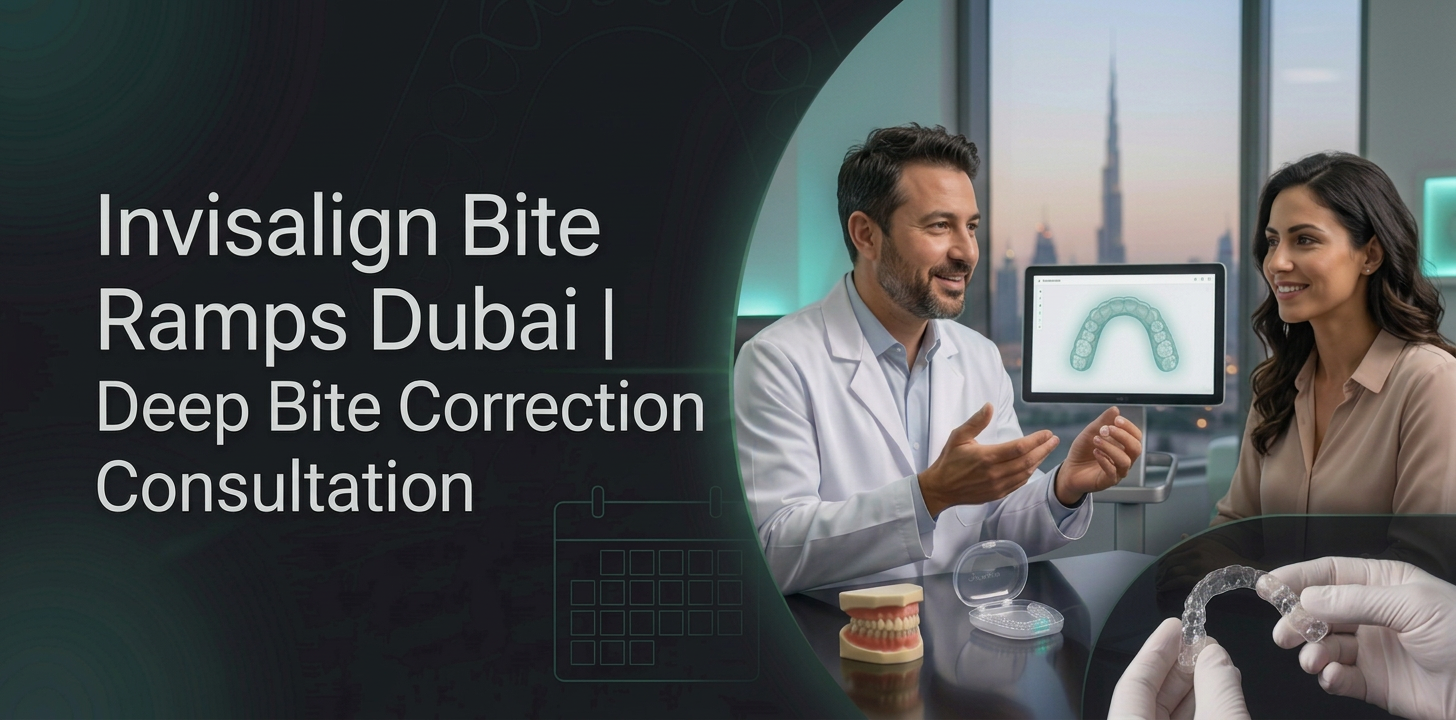
Invisalign Bite Ramps Dubai | Deep Bite Correction Consultation
Invisalign bite ramps are a clever, well-engineered solution to a genuinely difficult orthodontic problem. They work by disoccluding the back teeth so the bite can be opened predictably, and the clinical literature supports their use in deep bite correction — with the honest caveat that severe cases require skill, staging and sometimes adjuncts to achieve a complete result.
The variable that actually determines your outcome isn’t the ramp. It’s the plan behind it.
If you’re in Dubai and dealing with a deep bite, worn front teeth or a smile that doesn’t show enough tooth, an assessment with Dr. Basel Mofti — UK board-certified Specialist Orthodontist, Invisalign Diamond Top 1% Provider, and Adjunct Clinical Professor at Ajman University — is the logical first step. A 3D scan and digital workup will tell you in one appointment whether bite ramps are part of your solution, how long treatment is likely to take, and what it will cost.
Book a consultation at Dr. Joy Dental Clinic, JVC (Circle Mall) or Town Square, and get a plan built around your face — not just your teeth.